Toborlife adds a supported training-data workflow for Unitree G1
The new G1 EDU teleoperation offering puts integration, data capture and support at the centre of the pitch. Its value depends on the work it saves researchers.
Review basis: Not a review
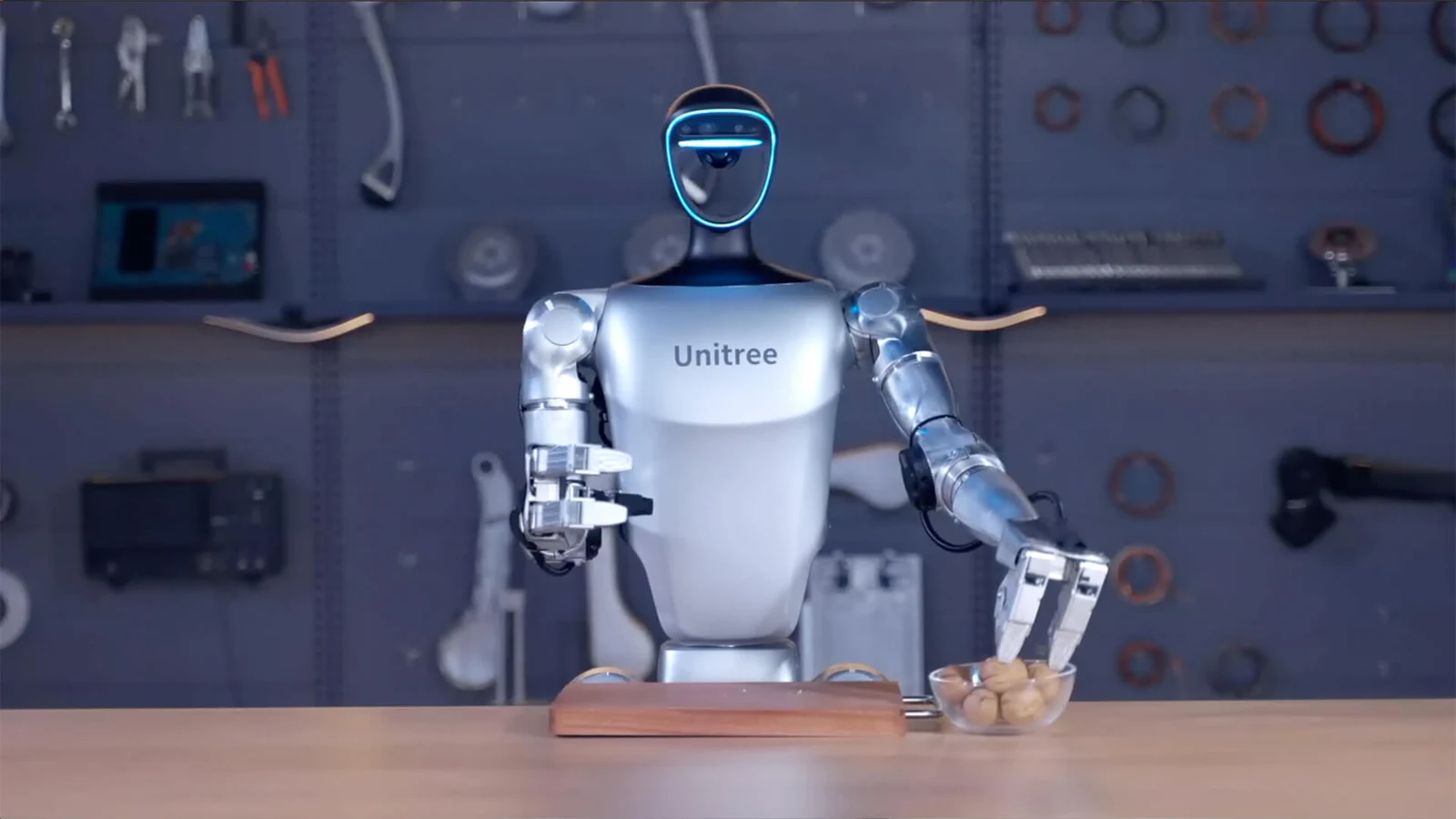
Toborlife AI announced full-body teleoperation software for the Unitree G1 EDU on 18 September, pitching a supported route from human demonstrations to robot-training data. The US company says the package is available with onboarding and domestic technical support. [S1]
The useful question is how much work it removes between buying a humanoid and running a repeatable experiment. A robot following a person in a headset can look impressive. For a research team, the more valuable output may be the recording it leaves behind.
According to Toborlife, operators use a PICO headset to guide the robot, while the system captures demonstrations for training. The company says customer data remains on customer-controlled hardware and is not sent to Unitree. These are supplier statements; PHASE has not independently tested the software or audited its data handling. [S1]
The competition includes an existing toolchain
Teleoperation itself is already part of Unitree’s developer ecosystem. Unitree’s public xr_teleoperate repository documents XR control, lists support for G1 configurations and several hand types, and provides installation instructions. Its supported XR devices include Apple Vision Pro, PICO and Meta Quest. [S2]
That changes how this announcement should be read. The commercial opportunity is to make a working research setup easier to deploy, maintain and use. It is not enough simply to show that a G1 can follow an operator.
Toborlife’s product page describes an integrated whole-body controller, a stereo camera feed, dexterous-hand support and synchronised data collection. It also describes integration, calibration and operator training among its services. Those are the elements buyers should compare against the time and expertise required to assemble their own system. [S3]
An experienced robotics group may prefer direct control over an existing software stack. A smaller team may value a supplier taking responsibility for setup and support. Neither choice is inherently better: the relevant comparison is the cost of achieving the same experimental result, including staff time and maintenance.
For Unitree, this is an encouraging direction. A third party offering tools around its hardware creates another route for researchers to use the platform. That is evidence of ecosystem activity, although it does not tell us how many paying users the new package has attracted.
Ask for the dataset, then the result
PHASE would assess the package with a practical acceptance test. Give the supplier a defined manipulation task, record a session, export the data and inspect what another researcher can reproduce from it.
The first questions concern the recording: which camera streams, robot states and operator commands are included? How are timestamps aligned? Are interrupted attempts retained and labelled? Can a team export the demonstrations in a documented format without continuing to use the supplier’s training tools?
The next questions concern performance. Buyers should ask for measured control latency, tracking-loss behaviour and repeatability under their intended network conditions. For a learning workflow, they should also ask to see a model trained on the exported demonstrations perform the task without an operator supplying the movements. These are proposed evaluation criteria, not test results reported by PHASE.
Data ownership deserves the same specificity. A promise that recordings stay with the customer should be reflected in the configuration and contract, including any remote-support access, telemetry, backups and software-update dependencies. Local storage is a useful starting point; it is not a complete description of a system’s data flows.
Australian laboratories should separately confirm compatibility with their exact G1 EDU configuration, support hours, service availability and where their recordings would be stored. The announcement describes a US-focused offering and does not establish an Australian support arrangement. [S1]
The distinction between teaching and performing remains essential. Human-guided demonstrations can be an input to robot learning; they do not establish that the robot has acquired a dependable autonomous skill. Toborlife’s proposition is worth following because reducing setup friction could let researchers spend more time testing that next step. The most persuasive evidence would be a customer showing the full sequence: installation, usable data, training and repeatable autonomous execution.
Sources & analysis
Primary source
Toborlife AI announces full-body teleoperation software for Unitree G1 EDU, 18 September 2026
Primary source
Unitree Robotics: xr_teleoperate repository and documentation
Primary source
Toborlife AI: Tobor Harness teleoperation system and service description
This is an independent, unofficial publication and is not affiliated with Unitree Robotics.
Reader discussion
No comments yet. Add the first thoughtful contribution.
Join the discussion