Unitree · Humanoid
H1
Full-size hardware. Full-scale integration.
Independent profile · Public-information analysis
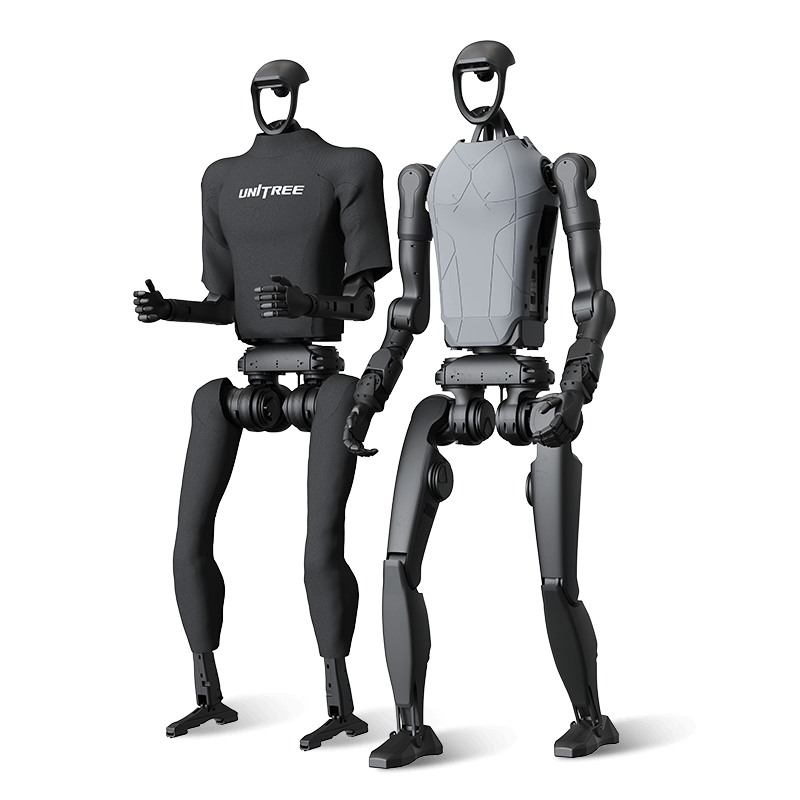
THE PHASE VIEW
Evaluate the complete experiment, not just the robot
H1 is most useful to assess as a physical research platform: the dimensions, inertia and development environment shape what an experiment can safely attempt. H1-2 needs its own assessment rather than inheriting H1’s performance claims.
For full-size humanoids, a test programme needs room for falls, controlled access and an agreed stop procedure. The purchasing decision should include the lab infrastructure and engineering effort needed to make the machine useful.
PHASE interpretation of public information. We have not tested this machine.
Where to evaluate it
Locomotion research
Assess repeatability on a defined surface before expanding terrain, speed or task complexity.
Whole-body control
Define the required interaction between balance, arm movement and the external environment.
Perception and autonomy
Separate sensor coverage from successful navigation. Ask how localisation, planning and recovery will be evaluated.
Know the configuration
Manufacturer comparisonH1
Approximately 180 cm and 47 kg. Five degrees of freedom per leg and four per arm in the published comparison.
H1-2
Approximately 178 cm and 70 kg. Six degrees of freedom per leg and seven per arm; this is a materially different configuration.
Configuration notes summarise the linked manufacturer page. Confirm the exact hardware and software in writing.
Technical reference
Manufacturer specifications; not independent measurements. Checked .
- Height
- About 180 cm (H1)Manufacturer specification
- Weight
- About 47 kg (H1)Manufacturer specification
- Battery capacity
- 864 Wh (H1)Manufacturer specification
- Perception
- 3D LiDAR and depth cameraManufacturer specification
- Leg joints
- 5 DOF per leg (H1); 6 (H1-2)Manufacturer specification
- Arm joints
- 4 DOF per arm (H1); 7 (H1-2)Manufacturer specification
MANUFACTURER FOOTAGE
See the machine in motion
Unitree’s promotional demonstration, not a PHASE test. Edited footage does not establish task reliability, autonomy or the features included in every configuration.
BUYING IN AUSTRALIA
Scope the purchase.
Not just the hardware.
Ask an Australian supplier or importer how the robot will be delivered, lifted, commissioned and serviced. Compare downtime arrangements as carefully as the initial hardware price.
Australian availability and local support have not been independently verified. No verified Australian delivered price is published here.
Questions before you commit
- Require the quotation, documentation and demonstration to identify H1 or H1-2 explicitly.
- Confirm the control computer, user-development computer and any optional acceleration hardware.
- Set limits for speed, contact and access to the operating area; document how a stopped robot is recovered.
Sources & evidence
- Primary sourceUnitree H1 — official product information
Product information and configuration comparisons are attributed to Unitree. The PHASE view, evaluation questions and buyer considerations are editorial analysis. Suggest a correction.
PHASE coverage
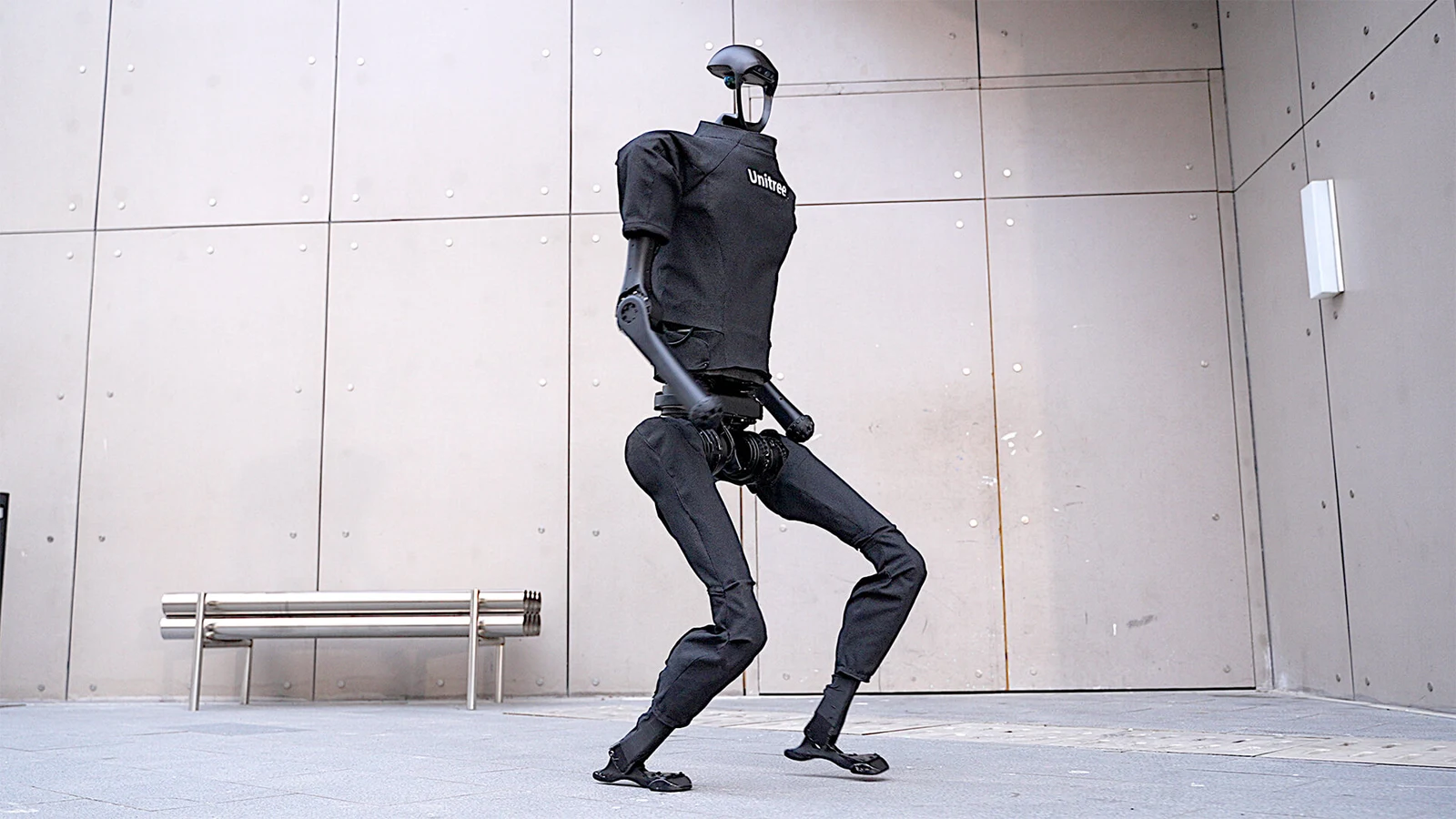
Unitree’s 80% test needs a better question: 80% of what?
20–26 August 2026 in review. Wang Xingxing described a threshold for robotics’ breakout. Turning that ambition into a useful test requires more than a percentage.
PHASE SERVICES
Find hire and support for this robot.
2 listed services mention this model. Confirm the exact edition, firmware and task with each provider.
Official demonstration image. Unitree Robotics. Original video
This is an independent, unofficial publication and is not affiliated with Unitree Robotics.