Unitree’s 80% test needs a better question: 80% of what?
20–26 August 2026 in review. Wang Xingxing described a threshold for robotics’ breakout. Turning that ambition into a useful test requires more than a percentage.
Review basis: Analysis based on public information
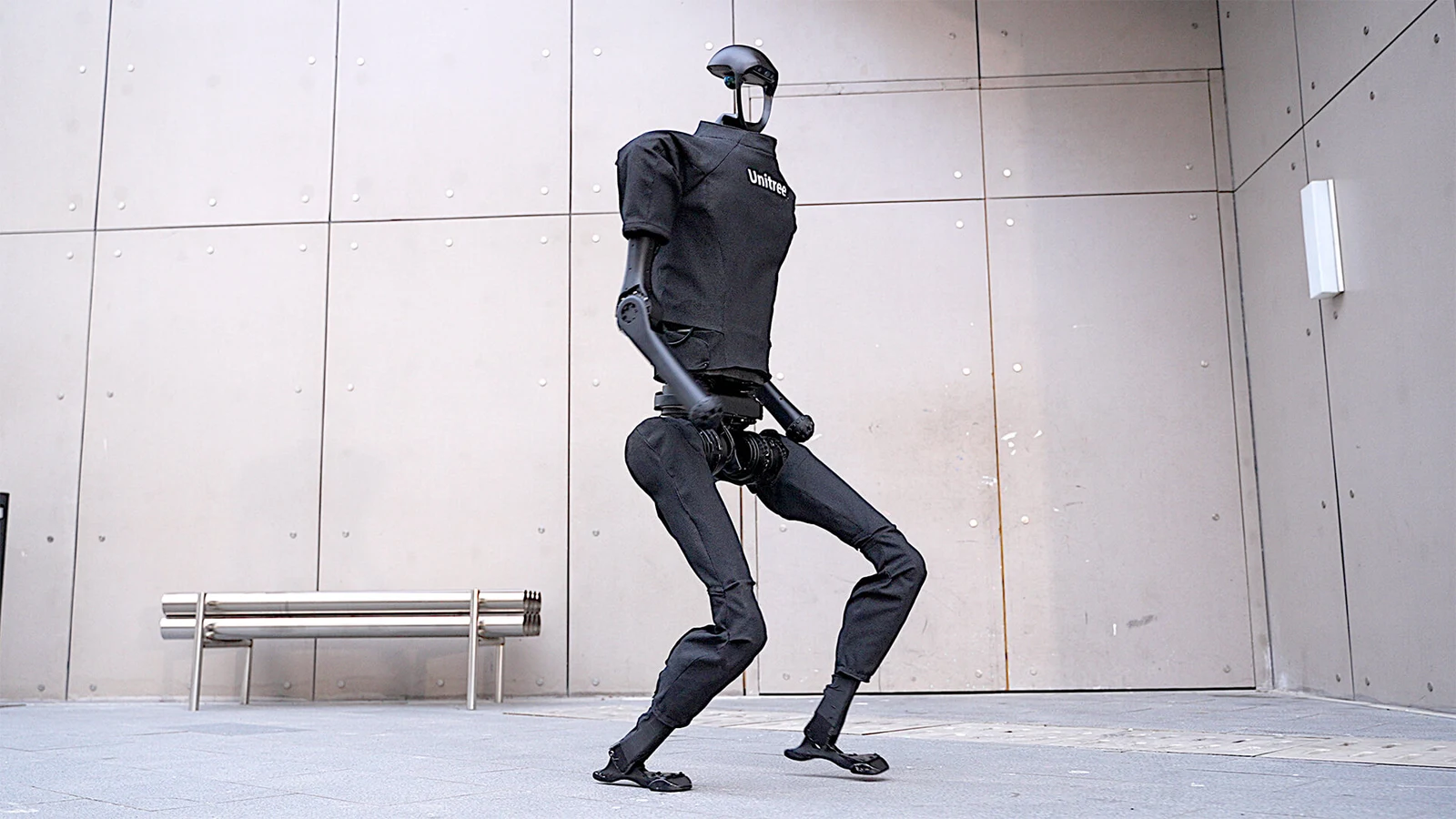
The most useful statement from Unitree’s first week as a listed company concerned what its robots still need to learn. At the World Robot Conference on 20 August, Wang Xingxing described a potential turning point: robots completing roughly 80% of tasks in 80% of unfamiliar settings, following spoken or written instructions. China News Service reported his remarks from the forum. [S1]
That is a proposed threshold, not a result Unitree has demonstrated. Wang’s broad timetable—two to three years at the faster end, five to ten at the slower end—was a forecast. It should not become a countdown attached to a product order. [S1]
A percentage needs a denominator
PHASE’s assessment is that the value of this proposal lies in its emphasis on unfamiliarity. The unanswered question is how the test population would be chosen. Eight successful tasks out of ten carefully selected demonstrations mean something different from eight out of ten tasks requested by an independent evaluator.
Imagine two tests. In one, a robot moves the same kind of cup between marked locations. In another, someone asks it to clear a table containing an unfamiliar mug, a loose cable and a half-open food container. Both might be described as tabletop manipulation. They place different demands on perception, judgement and recovery. These are illustrative examples, not accounts of Unitree testing.
A credible assessment should disclose the task list before trials, identify which objects and locations were excluded from training, and record every attempt. It should also define whether a person may reposition an object, repeat an instruction or rescue the robot. Otherwise, an apparently strong success rate can hide substantial supervision.
Self-improvement still needs an evaluator
The conference report also describes Unitree’s proposed development loop: AI-assisted research and code generation, simulation, physical tests, and feedback from AI and human assessment. That is a company account of its approach; the report does not supply an independently reproduced benchmark. [S1]
Our concern is what gets rewarded. If evaluation measures only completion, a system may look successful while moving too slowly, requiring repeated resets or handling an object in an unacceptable way. Useful work needs a richer definition: completion within the agreed conditions, acceptable damage risk, bounded assistance and repeatability.
A development loop can make testing faster. It does not remove the need to decide what the tests actually represent. That decision is particularly important when performance in a familiar room is used to imply readiness for unfamiliar homes or workplaces.
What readers should ask to see
For a research lab, the useful next publication would include a reproducible task suite, the training exclusions, trial counts and intervention logs. For a prospective customer, it would include a demonstration using their own objects and a written acceptance test. An impressive average should be accompanied by the types of failure that remain.
For PHASE SHIFT, the 80% formulation is a useful discussion prompt, not a conversion formula. It cannot be multiplied into a 64% readiness score, and this article does not change the index. We would look for evidence of transfer between tasks and environments before drawing a broader conclusion.
The distinction is practical: an ambition describes the destination. A disclosed evaluation shows how much of the journey has actually been completed.
Editorial note: prepared with AI assistance and published at the operator’s direction. This is a retrospective analysis; the publication date records when this article appeared on PHASE. PHASE retains editorial responsibility.
Sources & analysis
Secondary reporting
Wang Xingxing on robot self-improvement and generalisation at WRC China News Service · Published 2026-08-20 · Retrieved 14 September 2026
This is an independent, unofficial publication and is not affiliated with Unitree Robotics.
Related reading
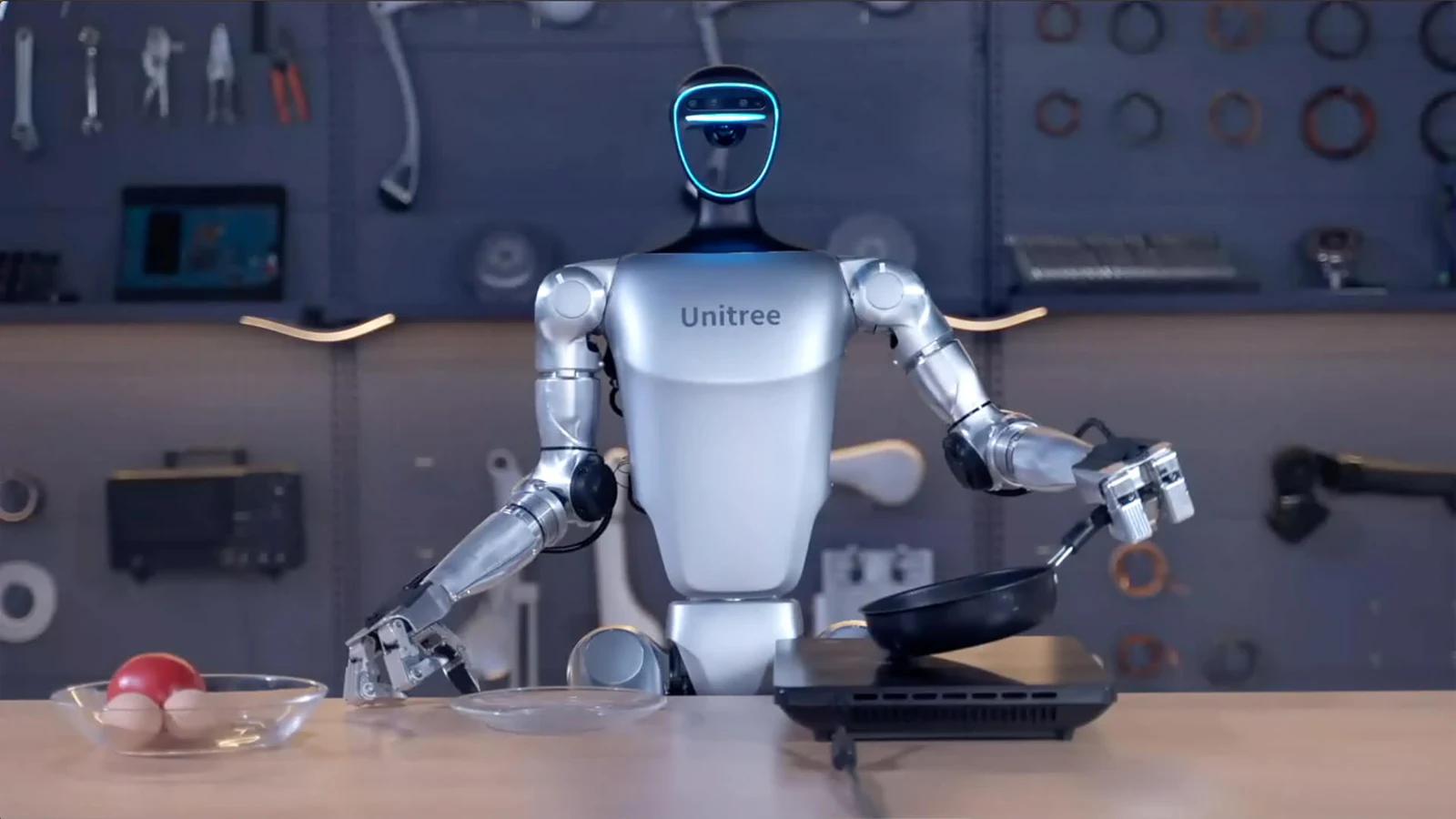
G1+ puts the upgrade question in the sensors, not just the motors
10–16 September 2026, reviewed through 14 September. A reading of Unitree’s current G1+ specification highlights sensing, configuration and developer access—the details that matter before an upgrade.
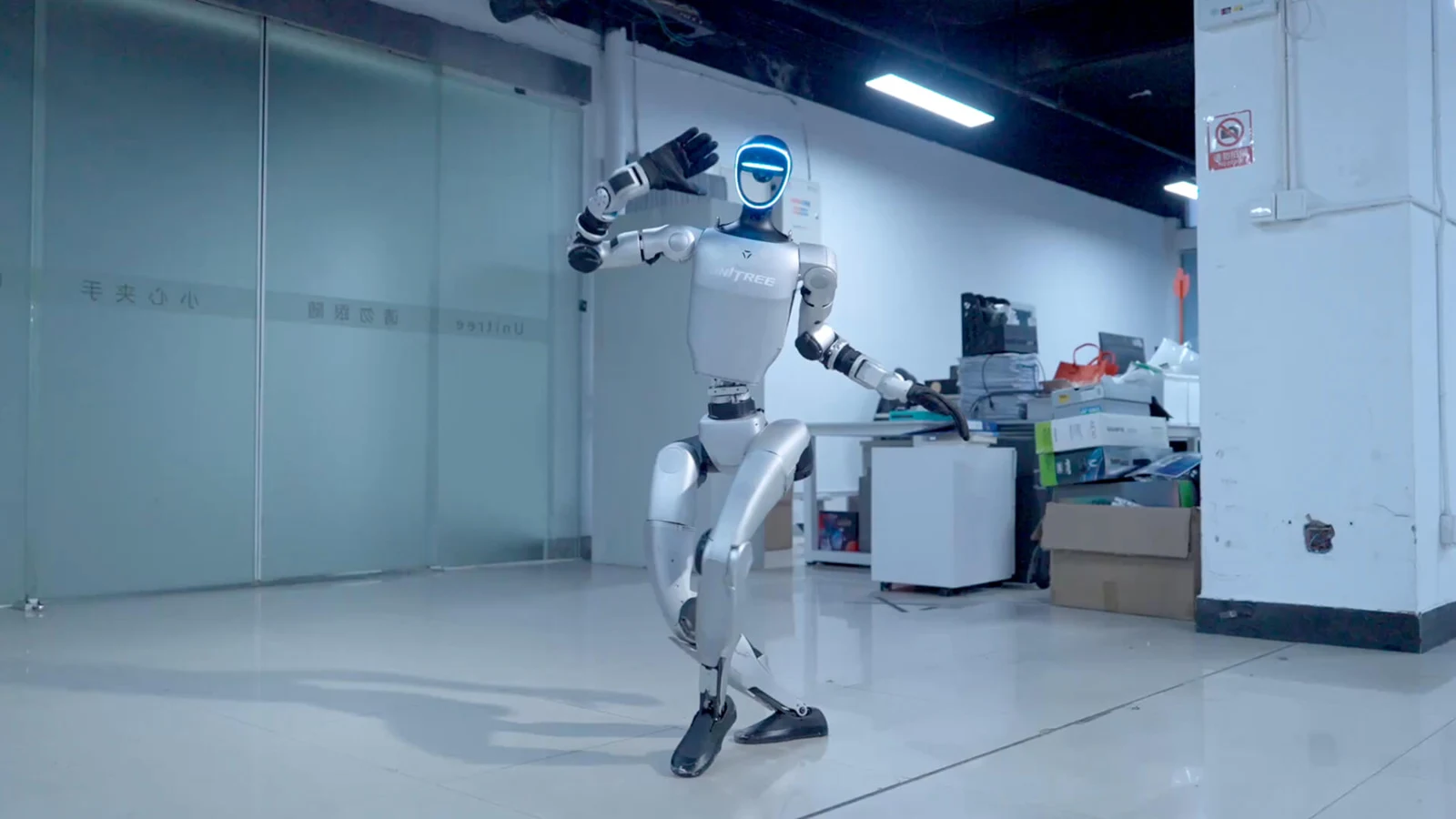
Unitree’s autonomous combat claim needs evidence beyond the ring
3–9 September 2026 in review. The UnifoLM-X2-1.0 announcement put real-time interaction in the spotlight. The next questions concern the test conditions, supervision and transfer to useful tasks.
Unitree’s IPO created paper wealth. That is not the same as cash for robotics.
27 August–2 September 2026 in review. Attention shifted to the shareholders behind Unitree. The useful distinction is between a valuable stake and resources available to build the business.
Reader discussion
No comments yet. Add the first thoughtful contribution.
Join the discussion