G1’s first flex: a body with room to move.
A retrospective on Unitree’s 13 May 2024 G1 launch reel: mechanical range, selected hand interactions and the gap between a pose and a reliable task.
Configuration · G1 launch footage from 2024, showing different hand appearances across scenes. This is not an assertion that every configuration or present-day retail package includes every demonstrated feature.
The 20-second version
- WHAT HAPPENED
- The 2024 launch reel shows an extreme backward bend, object handling and a nut-changing-from-intact-to-fragments sequence, alongside simulation imagery.
- WHY IT MATTERS
- Mechanical range and useful hand contact give a robot more ways to approach a task.
- THE CATCH
- A movement montage does not reveal autonomy, training history or repeatability. Some scenes are explicitly slowed down.
- PHASE TAKE
- An engineering flex worth revisiting, with its original date kept firmly attached.
What we actually saw
Observable events are separated from PHASE interpretation. Timestamps identify moments in the source; they are not player controls.
- 00:15OBSERVED
G1 bends its torso far backwards with its knees bent and arms raised. [S2]
PHASE INTERPRETATION · Large visible motion range is the narrow claim. No joint angle has been measured from this image.
- 01:00OBSERVED
The robot holds a long rod horizontally in front of its body. [S2]
PHASE INTERPRETATION · The visible grasp is evidence of holding that object in this setup.
- 01:07OBSERVED
The reel switches to a rendered scene containing many robot models on a checkerboard surface, with an imitation-and-reinforcement-learning caption. [S2]
PHASE INTERPRETATION · This is simulation imagery, not footage of a physical robot fleet or an independent training-method audit.
- 01:11OBSERVED
A nut is on a wooden board beside a bowl of nuts, with the robot’s fingers at the board. [S2]
- 01:15OBSERVED
Fragments are now visible on and around the board. The manufacturer labels this segment 1× original speed. [S2]
PHASE INTERPRETATION · The visible before-and-after result does not supply a trial count, applied force or food-handling success rate.
- 01:22OBSERVED
The robot holds a container while liquid sprays across the frame. [S2]
PHASE INTERPRETATION · Physical contact and liquid release are visible. This is not a demonstration of tidy drink service.
- 01:32OBSERVED
A mallet is held near the other hand. The scene is labelled 0.1× original speed. [S2]
PHASE INTERPRETATION · Do not read the slowed footage as the original movement speed or as a certified durability test.
Give the robot some credit
A large movement range gives a controller more postures to choose from. Getting the mechanical arrangement to accommodate the visible backward bend is an achievement before any discussion of language models begins. [S2]
Hands must make useful contact with objects, not merely resemble human hands. The rod and nut scenes show contact and visible physical outcomes. That is relevant capability evidence even though the control method and reliability remain unknown. [S2]
The reel makes mechanical breadth easy to see. That breadth can support later research; it should not be mistaken for a complete task policy. Neither claim needs to cancel the other. [S2]
What this demo tells us
NOT SHOWN ≠ FAILED.
Mechanical range
STRONG SIGNALThe backward-bent posture is directly visible. The footage does not provide a measured range-of-motion test. [S2]
Manipulation
PROMISINGThe reel shows a rod held and a nut sequence ending in fragments. The signal concerns selected objects and outcomes, not arbitrary-object competence. [S2]
Autonomy
NOT ESTABLISHEDNeither physical poses nor simulation imagery disclose how much of each task is autonomously selected and executed. [S1] [S2]
Generalisation
NOT ESTABLISHEDNo held-out object set, unfamiliar environment protocol or changed-starting-state evaluation is supplied. [S1] [S2]
Repeatability
NOT ESTABLISHEDSelected scenes do not include complete attempt counts or an outcome log. [S2]
Robot or stagecraft?
On the robot
The physical footage shows a humanoid and hand configurations interacting with a rod and tabletop objects. [S2]
Likely supporting the demo
The physical scenes use an indoor demonstration area and a table with prepared objects. [S2]
The film includes a rendered simulation scene and differing original-speed captions. [S2]
Object placement and familiarity may support the demonstrations. The preparation process and command interface are not exposed.
Not disclosed
- Exact hardware and hand configuration used in each scene.
- Teleoperation, scripted control or autonomous control contributions.
- Number of trials and off-camera resets.
- Object familiarity, selection criteria and preparation.
- Force measurements, durability protocol and long-run failure modes.
None of this makes the demo fake. It tells us how far the demo is from deployment.
The “okay, but can it…” test
What comes next?
Today
An original launch montage establishes visible mechanical range and selected hand-object interactions.
Next test
- Can it handle objects of different size and stiffness with the same declared task policy?
- Can it begin from altered object positions and recover from an imperfect grasp?
- Can it repeat the task sequence while showing every attempt and intervention?
Real-world bar
Complete useful object-handling tasks from varied starting states with predictable outcomes and clear recovery behaviour. Mechanical range supplies options; a reliable task system must choose and execute them.
PHASE SHIFT IMPACT
NO INDEX CHANGE
SUPPORTS EXISTING ASSESSMENT
This is a retrospective look at a May 2024 release, not fresh September 2026 evidence. The original film demonstrates mechanical potential but provides no new transfer or reliability results that justify moving the existing assessment.
Relevant dimensions: Manipulation · Generalisation · Reliability
Read the referenced assessment →VERDICT
ENGINEERING FLEX
A strong introduction to mechanical range and selected hand interactions. It succeeds as a hardware demonstration without establishing a general-purpose worker. The useful follow-up is repetition with changed objects and starting states.
PHASE editorial classification. Not a scientific rating.A retrospective, dated honestly
The original publication is 13 May 2024. This Demo File is being prepared in September 2026. Its place in the series will reflect actual editorial publication order, not an invented historical issue number. [S1]
The film mixes physical footage, rendered simulation and scenes carrying different speed captions. This analysis distinguishes those evidence types. The present-day product page describes configuration options; it does not establish the exact build in every launch shot. [S2] [S3]
Receipts
MANUFACTURER
Unitree Robotics — original G1 launch, 13 May 2024
MANUFACTURER
Unitree — manufacturer-hosted full G1 launch film
TECHNICAL DOCUMENTATION
Unitree G1 — current product and configuration documentation; not a 2024 specification archive
PHASE ANALYSIS
PHASE SHIFT — provisional assessment prepared 14 September 2026
This is an independent, unofficial publication and is not affiliated with Unitree Robotics.
Related reading
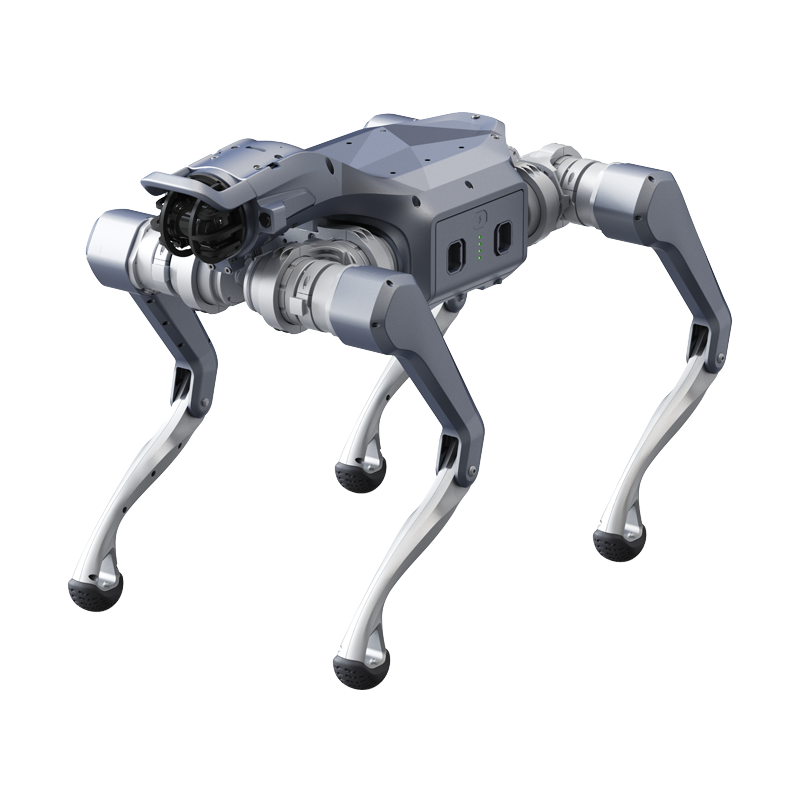
As2 goes outdoors. Now show us the whole route.
Woodland, shallow water, a carried bag and a racket cameo: what Unitree’s February 2026 As2 reel establishes, and what needs a longer test.
Reader discussion
No comments yet. Add the first thoughtful contribution.
Join the discussion