REACH gets Unitree G1 under a 40 cm clearance. The reliability result is narrower.
The system combines LiDAR planning, variable-height walking and crawling. Its 48/50 real-robot transition result is measured; the full confined-space runs are still demonstrations.
Review basis: Analysis based on public information
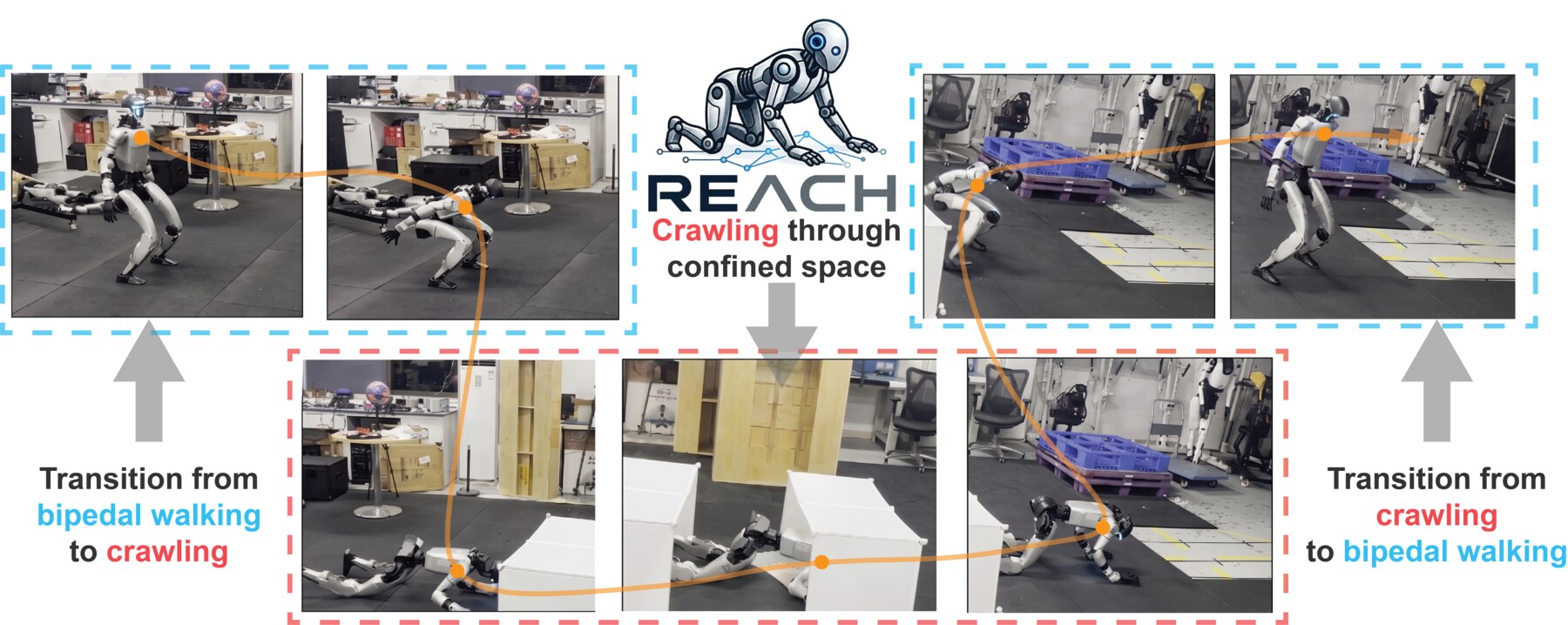
A humanoid that only stands and crouches still has a hard floor on where it can go. REACH adds a lower mode: it teaches an unmodified Unitree G1 to move from variable-height bipedal walking into four-limbed crawling, pass beneath low obstacles and return to walking.
The researchers show a physical G1 walking beneath an 80-centimetre clearance and crawling through a 40-centimetre passage. More importantly, they report repeated hardware tests for the transition itself: 25 successful squat-to-crawl transitions from 25 attempts, and 23 crawl-to-squat transitions from 25 attempts.
Those numbers are useful, but narrow. They measure the mode change in a controlled setup. The paper does not report a repeated success rate for the entire planner-to-obstacle-to-exit sequence. The full confined-space runs remain demonstrations, not a reliability benchmark or a commercial deployment.
One system, three learned locomotion policies
REACH divides the problem rather than asking one policy to cover every posture.
Its bipedal policy accepts body-height commands from 1.27 metres down to 0.50 metres. A separate crawling policy covers 0.50 to 0.20 metres. A bidirectional transition policy connects the shared 0.50-metre posture, where the robot can move between a deep squat and a hands-and-knees configuration.
That separation matters because crawling changes both kinematics and contact. The G1 is no longer balancing on two feet; its hands, knees and lower body can interact with the floor and obstacles. REACH’s crawling policy uses a history-conditioned latent representation intended to infer this changing contact context from the robot’s proprioceptive history.
Training uses privileged terrain and contact information in simulation, but the deployed actor receives its own observations and command inputs. That is a conventional asymmetric actor-critic arrangement: extra information can shape training without being required on the physical robot.
Planning supplies height before the obstacle
The learned policies are only the lower layer. A LiDAR-based planning stack accumulates a point cloud, generates a collision-free three-dimensional path and converts that path into velocity and body-height commands.
This is the system’s most practically interesting choice. A low obstacle is not handled only as a last-second reflex. The planner can lower the commanded body height in advance, choose between bipedal and crawling modes, and raise the robot again after the restriction.
The project videos show separate variable-height walking and crawling runs, a complete walk–crawl–walk transition, and a sequence through multiple low obstacles. These are real-robot demonstrations on a Unitree G1, not simulation clips. They support the claim that the components can operate together.
They do not establish that the stack can map and traverse an unfamiliar worksite indefinitely. The paper’s scenes are controlled laboratory courses. It does not publish repeated end-to-end trial counts, long-duration autonomy, recovery rates after planner or perception errors, or performance with moving people and objects.
The strongest number is 48 transitions from 50 attempts
The hardware transition evaluation is the clearest reliability evidence in the paper:
- squat to crawl: 25/25 - crawl to squat: 23/25 - combined: 48/50, or 96%
The two failures occurred in the harder return direction. The paper also compares the full transition design with ablations in simulation. The full method completed 25/25 squat-to-crawl and 24/25 crawl-to-squat trials in that simulated test. Removing reward shaping produced 23/25 and 0/25; reducing robustness training produced 15/25 and 17/25.
Those ablations help explain why the transition policy was designed as it was. They are not extra physical-robot trials. The 96% figure belongs only to the 50 hardware transition attempts and should not be applied to the complete confined-space pipeline.
Similarly, the system’s commanded height ranges are not evidence that every clearance within those ranges is traversable. The physical demonstrations highlighted by the team are 80 centimetres for low bipedal walking and 40 centimetres for crawling. Geometry, floor friction, obstacle width and the G1’s approach angle still matter.
What the evidence does not yet cover
REACH was developed by researchers at Southern University of Science and Technology and the Chinese University of Hong Kong, and the project page says it has been accepted to Humanoids 2026. The public page hosts the project video and individual demonstrations. At the time of PHASE’s review, the paper link on the page was marked “forthcoming” and the code button said “to be released”; the arXiv manuscript was available separately.
That leaves important replication questions open. The paper and project materials do not provide evidence for:
- independent reproduction on another G1 - dust, water, loose debris or uneven industrial floors - stairs, ramps or obstacles that move during traversal - payload carriage while crawling - work near untrained people - emergency-stop behaviour, functional safety or certification - a repeated success rate for complete multi-obstacle missions
The system also depends on the quality of its LiDAR map and planner. A learned locomotion policy can track the wrong height command perfectly if perception or planning has misunderstood the scene.
Why this is relevant in Australia
Low-clearance movement is directly relevant to inspection and response work: underfloor voids, plant rooms, damaged structures and other spaces designed for people to crouch or crawl rather than walk upright.
REACH is not evidence that a G1 is ready for those jobs. Australian deployment would still require a task-specific risk assessment, reliable communications and stop controls, site testing, payload and environmental validation, and clear rules for operating around workers. In many spaces, a smaller tracked or quadruped robot will remain simpler and safer.
The research does change the capability boundary in a useful way. It shows that one commercial humanoid platform can combine planned height adaptation with a learned transition into a genuinely lower locomotion mode. The disclosed real-robot transition count makes that contribution more than a showreel.
The measured conclusion is therefore specific: REACH can execute the walk–crawl mode change reliably in the team’s controlled hardware test and can demonstrate planner-driven confined traversal on a physical G1. It has not yet shown reliable end-to-end operation in a real worksite.
PHASE reviewed the arXiv manuscript and official project page on 31 October 2026. This is analysis of public research, not a hands-on test.
Sources & analysis
Primary source
REACH: An RL-based Hierarchical Humanoid Crawling Framework for Adaptable Confined Space Traversal arXiv · Published 2026-10-27 · Retrieved 31 October 2026
Primary source
REACH official project page REACH research team · Published 2026-10-27 · Retrieved 31 October 2026
Primary source
arXiv submission record for REACH arXiv · Published 2026-10-27 · Retrieved 31 October 2026
This is an independent, unofficial publication and is not affiliated with Unitree Robotics.
Related reading
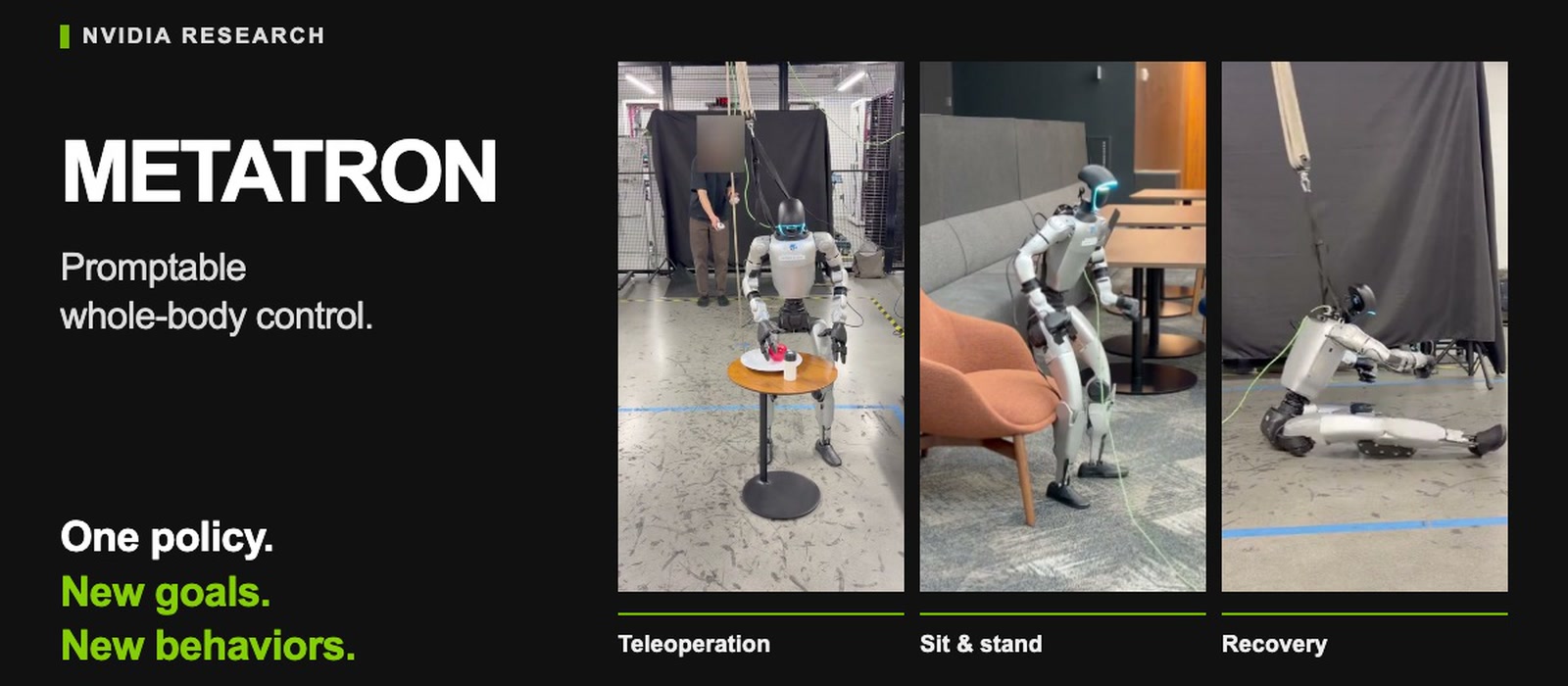
Metatron gives Unitree G1 one frozen controller. The benchmarks are still simulated.
NVIDIA’s policy handles steering, reaching, recovery, teleoperated pickup and sitting through changing goal prompts. Its 83% reaching result and push tests are MuJoCo results, while hardware evidence remains qualitative.
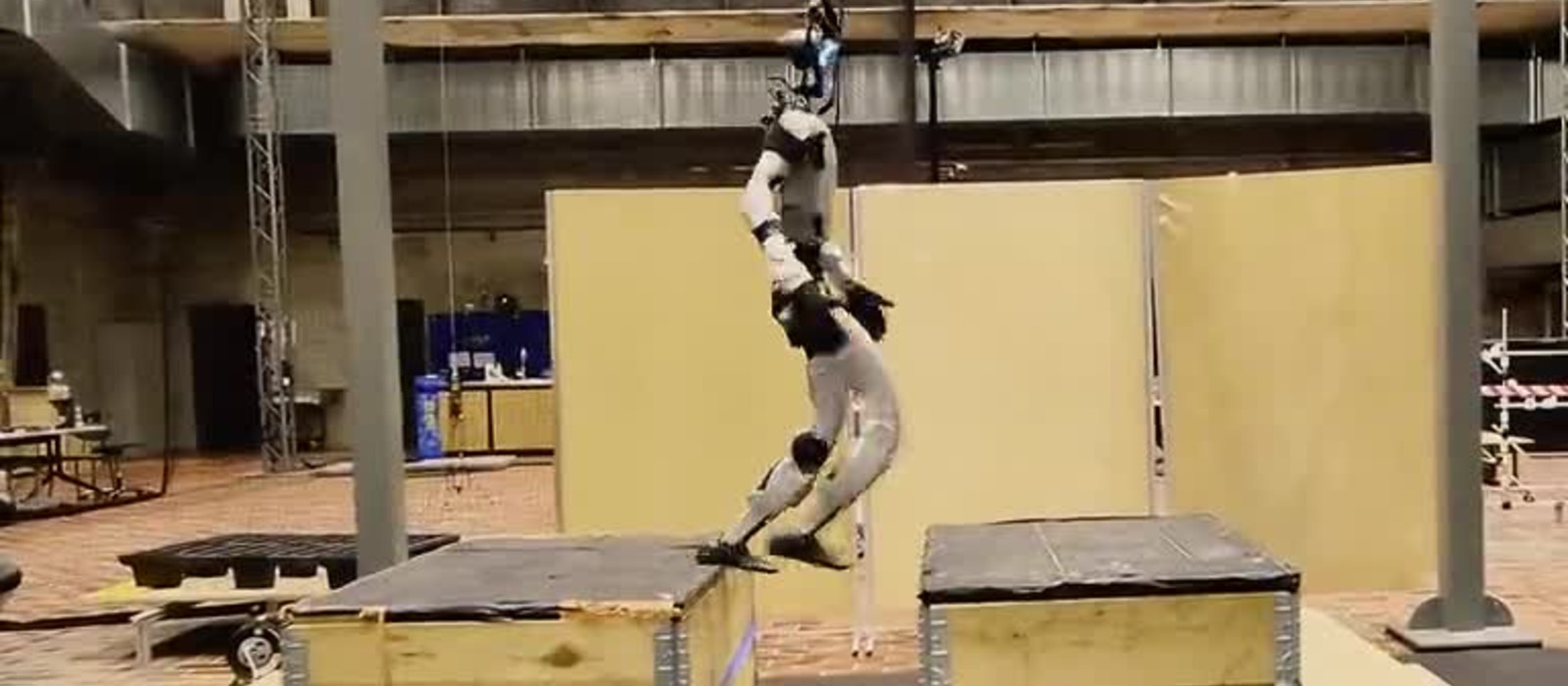
Watch Your Step cuts what Unitree G1 needs to see before it steps
A foothold predictor reduces the terrain input from 693 heights to 102 values and reaches the training curriculum roughly three times sooner. Real G1 videos show transfer, not measured reliability.
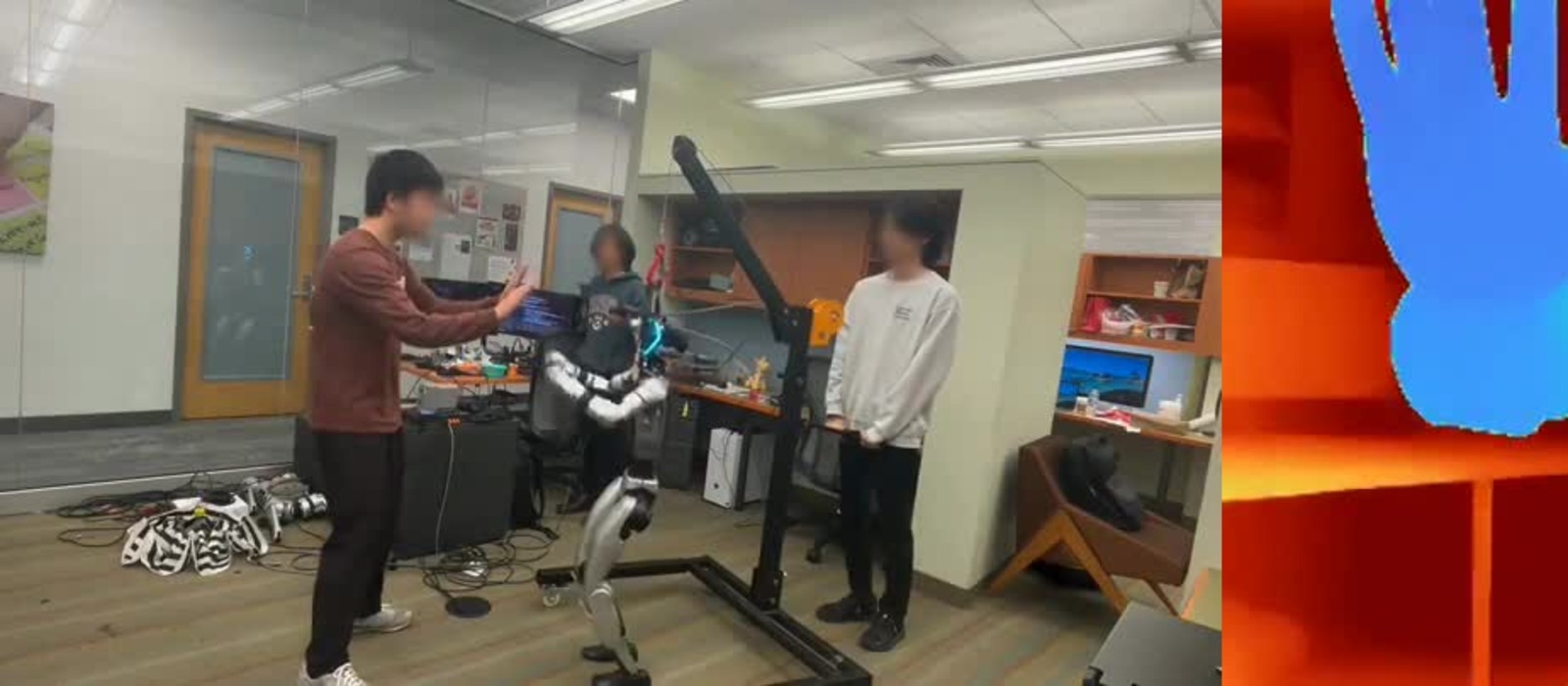
REACT lets a Unitree G1 handle close contact from its own camera
The research system completed 31 of 50 staged real-robot trials with no teleoperation or external tracking. Its five short interactions are not evidence of safe care or workplace deployment.
Reader discussion
No comments yet. Add the first thoughtful contribution.
Join the discussion