λ0 gives Unitree G1 more human experience. Robot training still matters.
Alibaba researchers pair 500 hours of human activity with whole-body motion to train a G1 policy. Their real-world trials support the approach, while the release still stops short of a reproducible deployment.
Review basis: Analysis based on public information
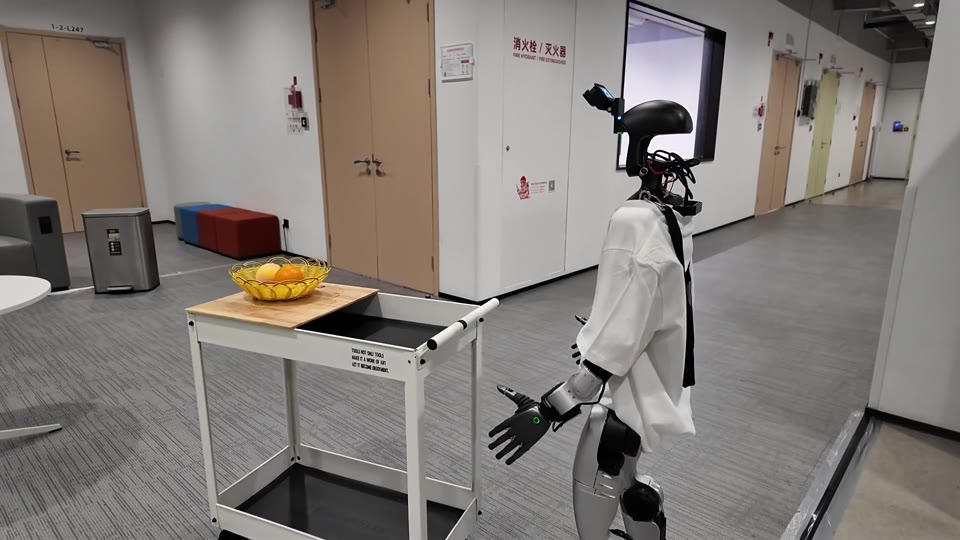
Alibaba researchers are using human demonstrations to teach Unitree G1 coordinated movement and manipulation, with less dependence on collecting every example through a robot.
Their λ0, or Lambda Zero, project combines a 500-hour human activity dataset called HumanVerse with a pipeline that converts human observations and movements into G1-compatible training data. The technical report was submitted on 13 October 2026 by a team affiliated with Alibaba Token Hub and Amap. It reports 25 completed trials out of 40 across four physical G1 tasks.
The useful advance is a more deliberate connection between human experience and whole-body robot training. It does not remove the need for robot demonstrations, and the public release is not yet a complete route to reproducing the result.
Keeping the body in the training data
A person picking up a box also adjusts their stance, bends and walks. Recording the hands alone loses part of the action.
HumanVerse pairs first-person video with synchronised body and hand motion. The project’s official overview describes wearable body tracking, a neck-mounted camera and reconstructed hand movements. This is instrumented collection, rather than a system learning directly from arbitrary internet footage.
Human and robot bodies still differ. The team aligns the camera views, replaces visible human forearms with rendered robot arms in the training images, and refines motion references and controller inputs offline. These steps try to preserve useful contacts when the same movement is executed through G1’s proportions and controller.
The policy then learns in stages: human hand interactions, aligned whole-body human activity, and finally task-specific adaptation. At deployment it takes camera images, a language instruction and the robot’s own state. It predicts body-motion representations and hand commands, with SONIC handling whole-body execution.
For a research lab, the attraction is access to more demonstrations without occupying its humanoid throughout collection. The conversion work remains substantial: more human recordings are only valuable if their geometry and timing survive the journey to robot actions.
What the physical trials establish
The real-world evaluation covers bottle disposal, toy storage, box transport and chair placement. G1 completes five, seven, seven and six of ten trials respectively, producing the reported 62.5% average success.
The report’s evaluation appendix defines autonomous success separately from partial progress. Human contact after execution starts disqualifies autonomous completion. The reported 80.4% progress score awards intermediate milestones; it is not another task-completion rate.
This is controlled, researcher-reported evidence. Each policy faces ten fixed initial configurations per task, and the standard evaluation uses objects already encountered in robot training. Forty trials provide a useful comparison within that setup, but little basis for predicting reliability over a work shift or in an unfamiliar Australian workplace.
The training ablation is especially informative. Keeping robot supervision fixed, removing whole-body human mid-training reduces real-world success from 62.5% to 22.5%. That supports the value of the human-data stage within the tested recipe. It does not independently establish how much robot data another lab could dispense with.
The headline simulation result needs separate treatment. The team reports 90% success on SIMPLE, using the best recorded configuration for each task. The appendix explicitly says this was not established as validation-only selection and should not be read as a fixed-configuration comparison. It is neither a 90% physical G1 success rate nor evidence of one unchanged policy reliably doing every task.
“Robot-free” applies to collection
The project also tests a human-to-robot transfer pipeline without target-task robot demonstrations. Those experiments are distinct from the final λ0 model, whose training includes native robot demonstrations and task-aligned human examples.
Collapsing the two would give readers the wrong impression: the final results do not show a G1 acquiring all these skills from human video alone.
The project page also separates the 500-hour mid-training corpus from 600 additional task-aligned human demonstrations reserved for final adaptation. That distinction matters when assessing generalisation. Exposure through human recordings is still exposure, even when an object was absent from the robot’s own demonstrations.
PHASE’s earlier Workhorse analysis examined another way to use human whole-body data. λ0 deserves separate coverage because it concentrates on scaling that experience into a staged vision-language-action training recipe, rather than Workhorse’s five-link planning interface.
What G1 researchers can use now
The OpenLambda repository, checked on 19 October, contains collection and alignment tools, model code and training configurations. Its release-status section also identifies important gaps: the pretraining and HumanVerse mid-training datasets are not included, and complete final post-training, evaluation and real-robot deployment workflows remain unreleased.
The documented setup uses a 29-body-joint G1 with BrainCo Revo2 hands, additional cameras and external computing. An existing G1 purchase therefore does not, by itself, reproduce the research platform.
For Australian universities and integration teams, λ0 is worth following as a data-collection and training approach. Before budgeting a replication, they need to establish which recordings, converters, checkpoints and deployment components are actually available.
The strongest claim today is that aligned whole-body human experience improved the authors’ G1 results under a defined protocol. The next useful evidence is an independently reproduced pipeline, broader physical trials and a complete release that lets other teams test the same claim.
Sources and release status checked on 19 October 2026 (Australia/Melbourne). PHASE has not physically tested this system.
Sources & analysis
Primary source
λ0: Scaling Open-World Egocentric Human Data for Humanoid Loco-Manipulation - technical report, v1 Lambda-humanoid Team, Alibaba Token Hub and Amap · Published 2026-10-13 · Retrieved 18 October 2026
Primary source
λ0 and HumanVerse - official project page and demonstrations Lambda-humanoid Team · Retrieved 18 October 2026
Primary source
OpenLambda - code, hardware requirements and release status Lambda-humanoid Team · Retrieved 18 October 2026
This is an independent, unofficial publication and is not affiliated with Unitree Robotics.
Related reading
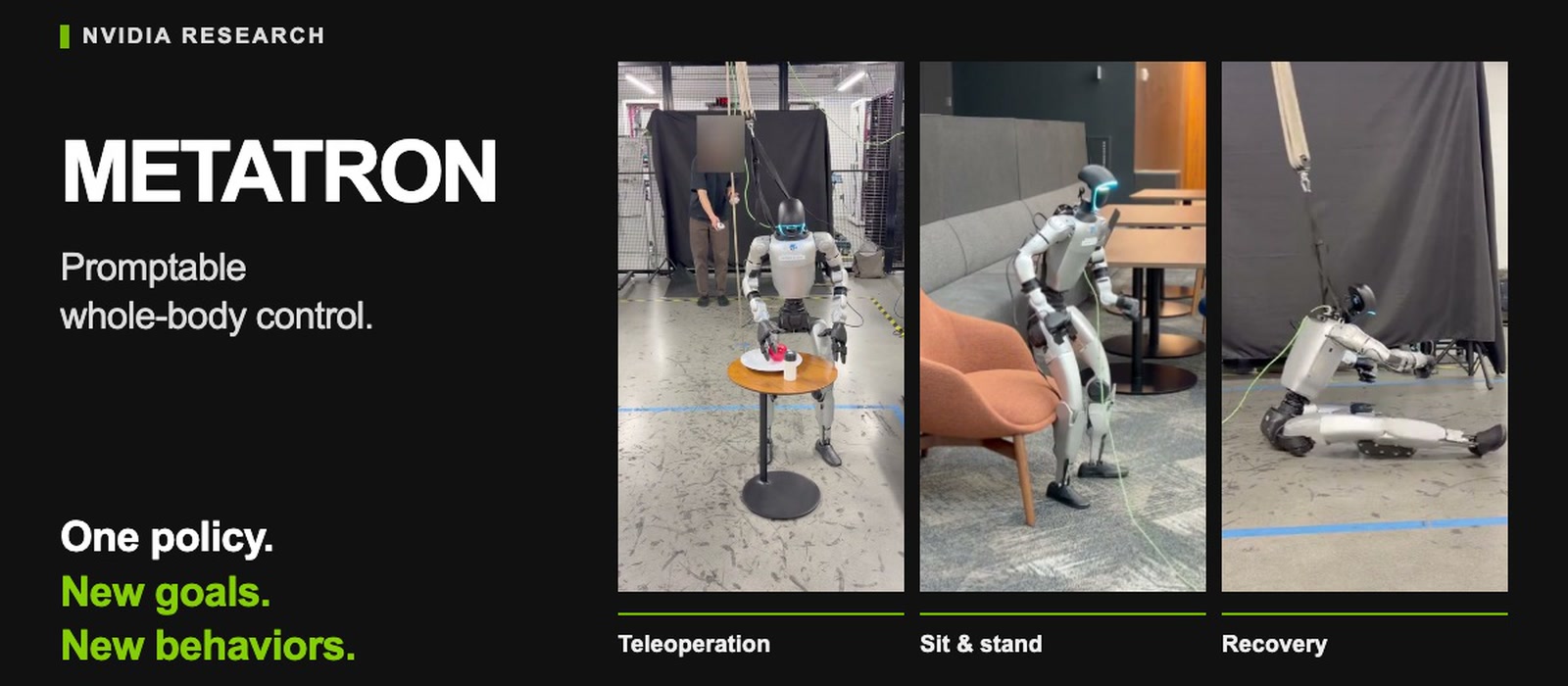
Metatron gives Unitree G1 one frozen controller. The benchmarks are still simulated.
NVIDIA’s policy handles steering, reaching, recovery, teleoperated pickup and sitting through changing goal prompts. Its 83% reaching result and push tests are MuJoCo results, while hardware evidence remains qualitative.
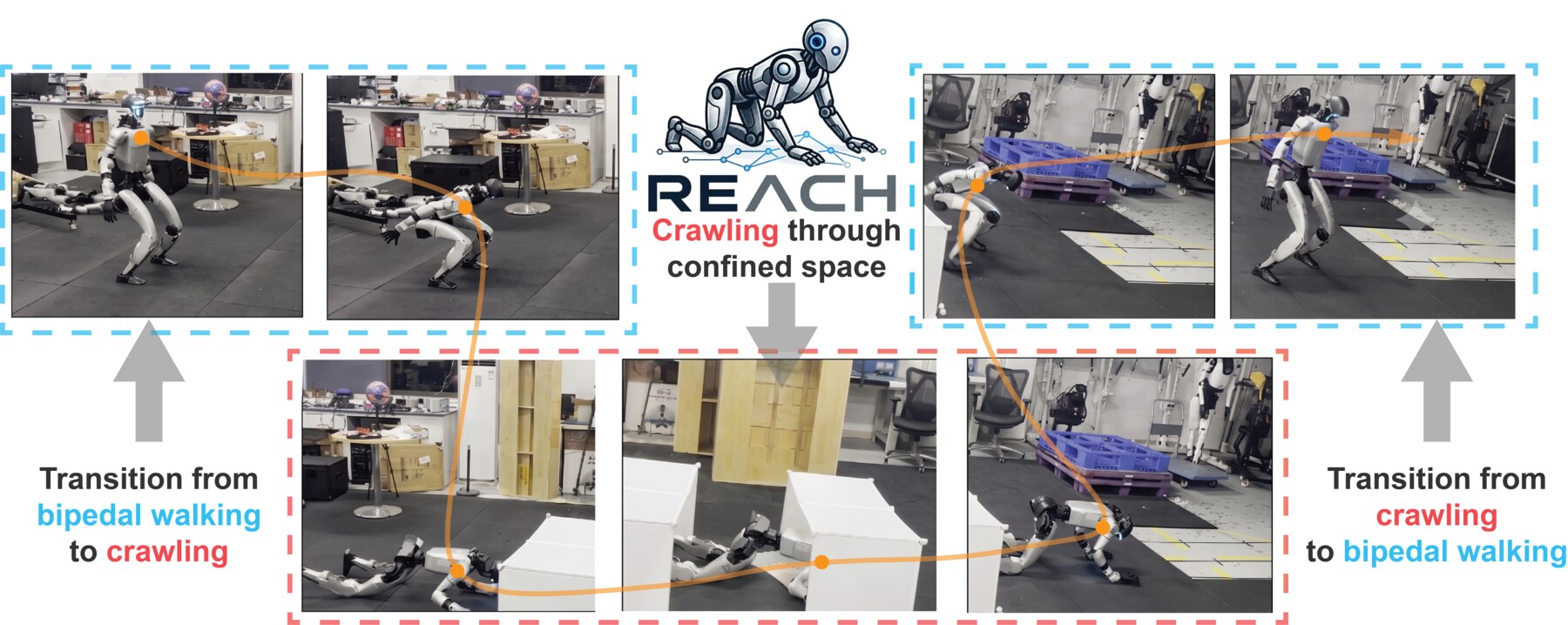
REACH gets Unitree G1 under a 40 cm clearance. The reliability result is narrower.
The system combines LiDAR planning, variable-height walking and crawling. Its 48/50 real-robot transition result is measured; the full confined-space runs are still demonstrations.
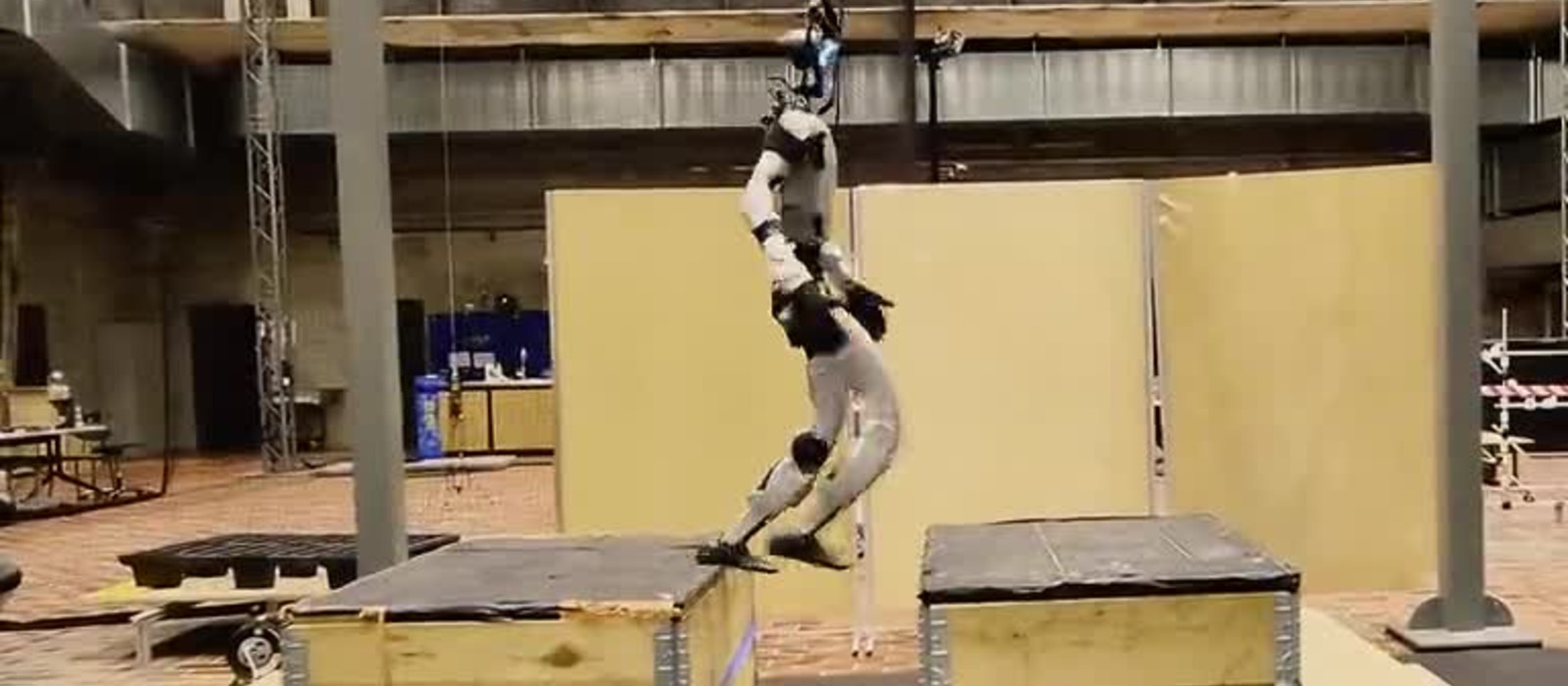
Watch Your Step cuts what Unitree G1 needs to see before it steps
A foothold predictor reduces the terrain input from 693 heights to 102 values and reaches the training curriculum roughly three times sooner. Real G1 videos show transfer, not measured reliability.
Reader discussion
No comments yet. Add the first thoughtful contribution.
Join the discussion