Unitree’s autonomous combat claim needs evidence beyond the ring
3–9 September 2026 in review. The UnifoLM-X2-1.0 announcement put real-time interaction in the spotlight. The next questions concern the test conditions, supervision and transfer to useful tasks.
Review basis: Analysis based on public information
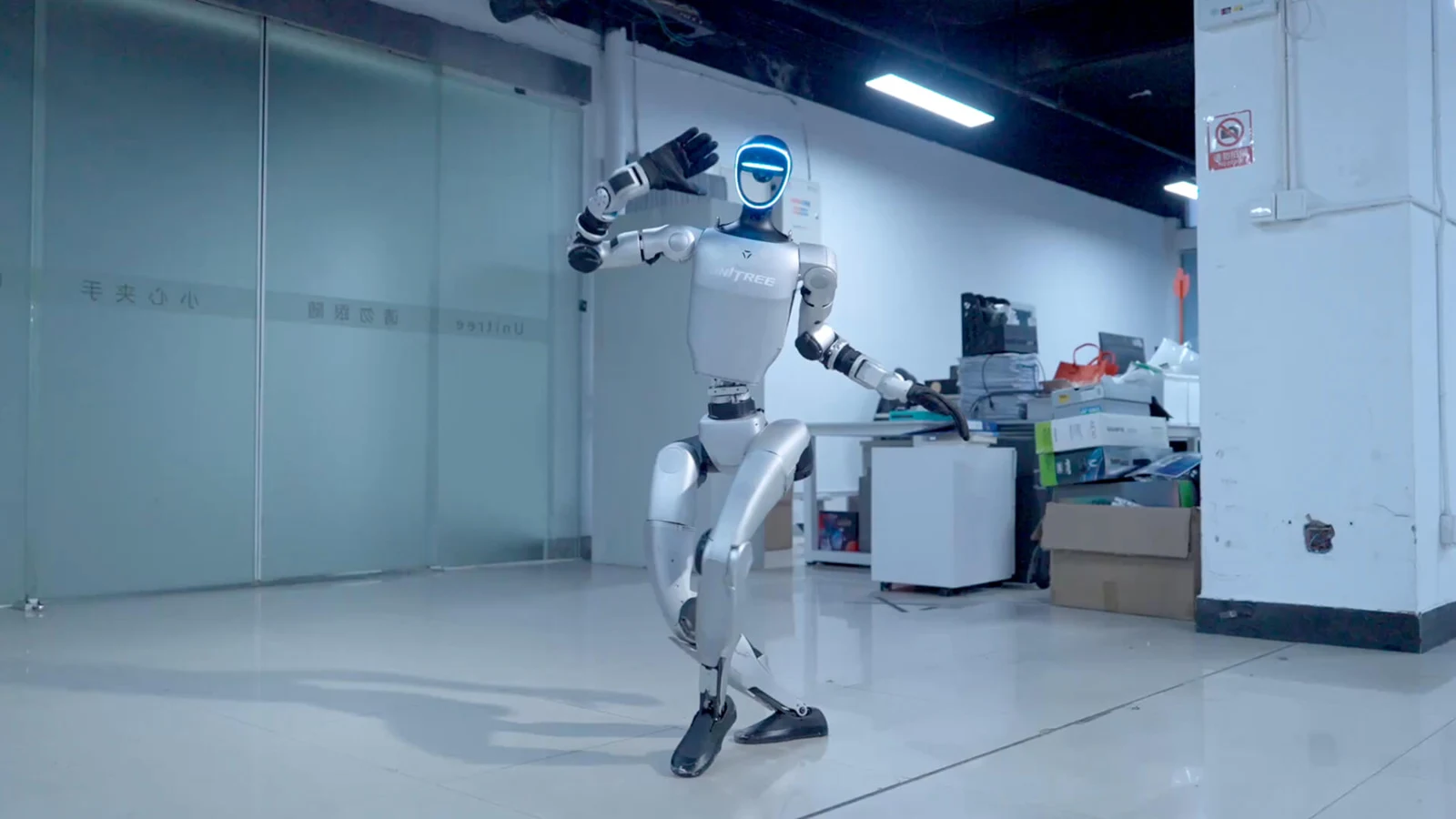
Unitree’s most consequential claim in the third week after its listing concerned robot decision-making. Reporting by The Paper, republished by CFi on 8 September, says the company released a humanoid combat demonstration on 7 September and attributed it to a model called UnifoLM-X2-1.0. The company described real-time prediction, planning and interactive execution. [S1]
Those are manufacturer claims reported by a news outlet. PHASE has not independently tested the system or verified the demonstration’s operating conditions. The account supports reporting the announcement; it does not establish how reliably the capability works or whether it transfers to other tasks.
What would make the claim significant?
Our interest is in the connection between a changing scene and the robot’s next action. If a system selects appropriate movements as another participant behaves unpredictably, that would be a different accomplishment from replaying a fixed sequence. The important word is “if”: the test needs to expose how behaviour was selected and what assistance was available.
A useful technical release would identify the observation inputs, available actions, decision timing and reset procedure. It would explain how opponents and starting conditions were chosen, whether the system encountered them during training, and what counted as a failed trial. These are proposed evaluation questions, not specifications of UnifoLM-X2-1.0.
Without that context, a demonstration can be visually persuasive while leaving the central engineering claim difficult to assess. The strongest follow-up would let another team repeat a bounded version of the test and inspect complete results.
Autonomous does not necessarily mean onboard
One distinction worth preserving in discussion is between where computation runs and who makes decisions. A robot can use an external computer without a human choosing each action. Conversely, processing on the robot does not prove that its behaviour is autonomous. The deployment arrangement and the amount of human intervention need separate descriptions.
PHASE has not established the computing arrangement used in this demonstration. We would ask for the hardware configuration, communication requirements and behaviour when connectivity is interrupted. That information would help a buyer or researcher judge whether the system fits their intended setting.
A claim of autonomy should also specify its boundaries. Who starts and stops a trial? Can someone select a routine during it? What happens after a fall or an unexpected observation? Reporting those interventions would make comparisons more meaningful.
The transfer question remains open
A successful interaction task would be interesting on its own terms. It would not establish that the same system can sort unfamiliar objects, operate a workplace tool or follow a sequence of household instructions. Those tasks introduce different goals and failure conditions.
For PHASE, the next milestone would therefore be a disclosed transfer experiment: a new task, clear limits on additional training and a complete record of outcomes. It would also need to account for unwanted contact and recovery, rather than judging success only by whether an action was completed.
The September announcement is worth following because it directs attention towards responsive behaviour. The evidence standard should rise with the ambition of the claim. For now, it is an announced demonstration to investigate, not proof of general-purpose reliability, a hands-on PHASE review or a reason to automatically change PHASE SHIFT.
Editorial note: prepared with AI assistance and published at the operator’s direction. This is a retrospective analysis; the publication date records when this article appeared on PHASE. PHASE retains editorial responsibility.
Sources & analysis
Secondary reporting
Unitree announces a world-model-driven humanoid demonstration The Paper, republished by CFi · Published 2026-09-08 · Retrieved 14 September 2026
This is an independent, unofficial publication and is not affiliated with Unitree Robotics.
Related reading
G1+ puts the upgrade question in the sensors, not just the motors
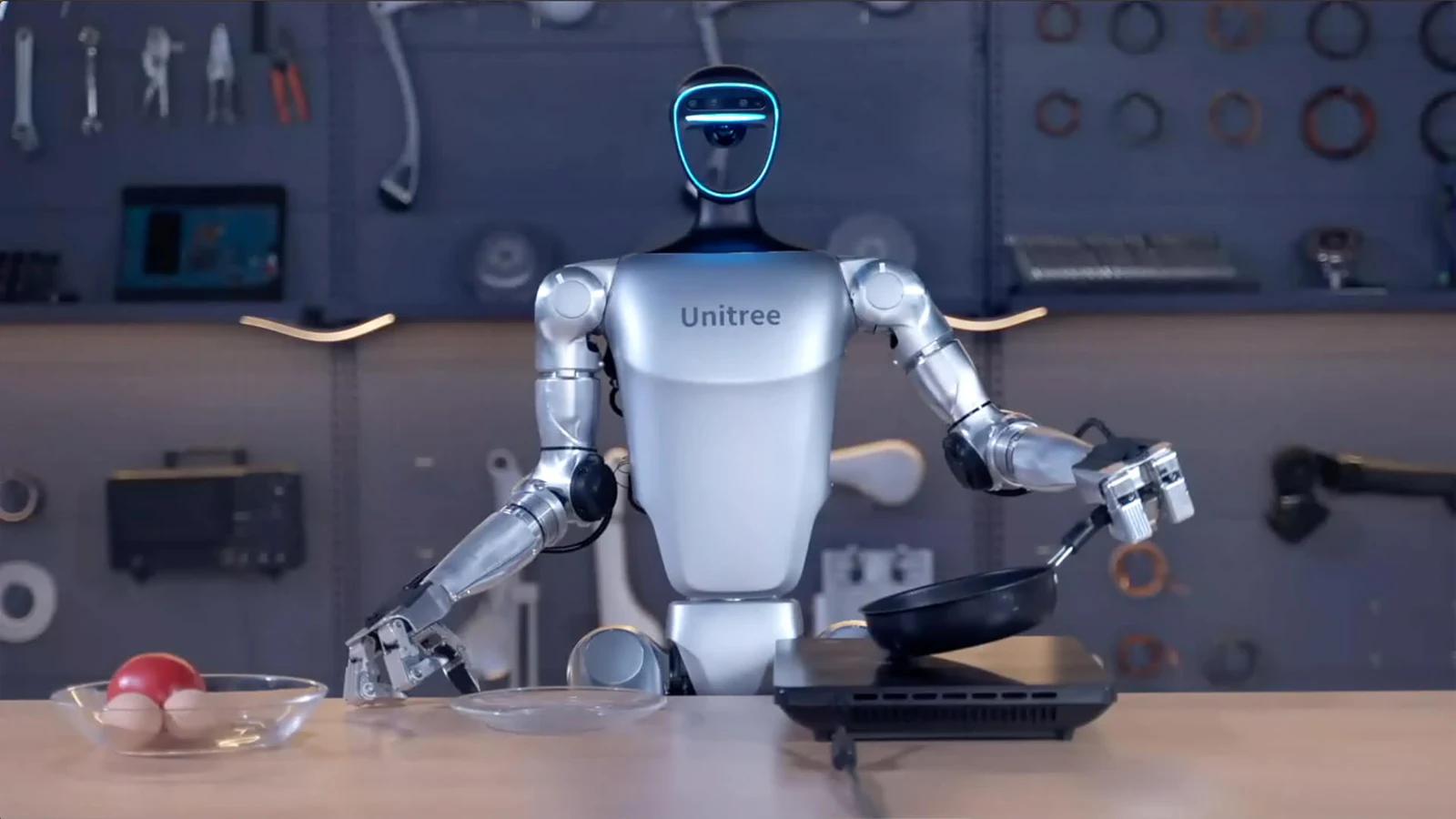
10–16 September 2026, reviewed through 14 September. A reading of Unitree’s current G1+ specification highlights sensing, configuration and developer access—the details that matter before an upgrade.
Unitree’s IPO created paper wealth. That is not the same as cash for robotics.
27 August–2 September 2026 in review. Attention shifted to the shareholders behind Unitree. The useful distinction is between a valuable stake and resources available to build the business.
Unitree’s 80% test needs a better question: 80% of what?
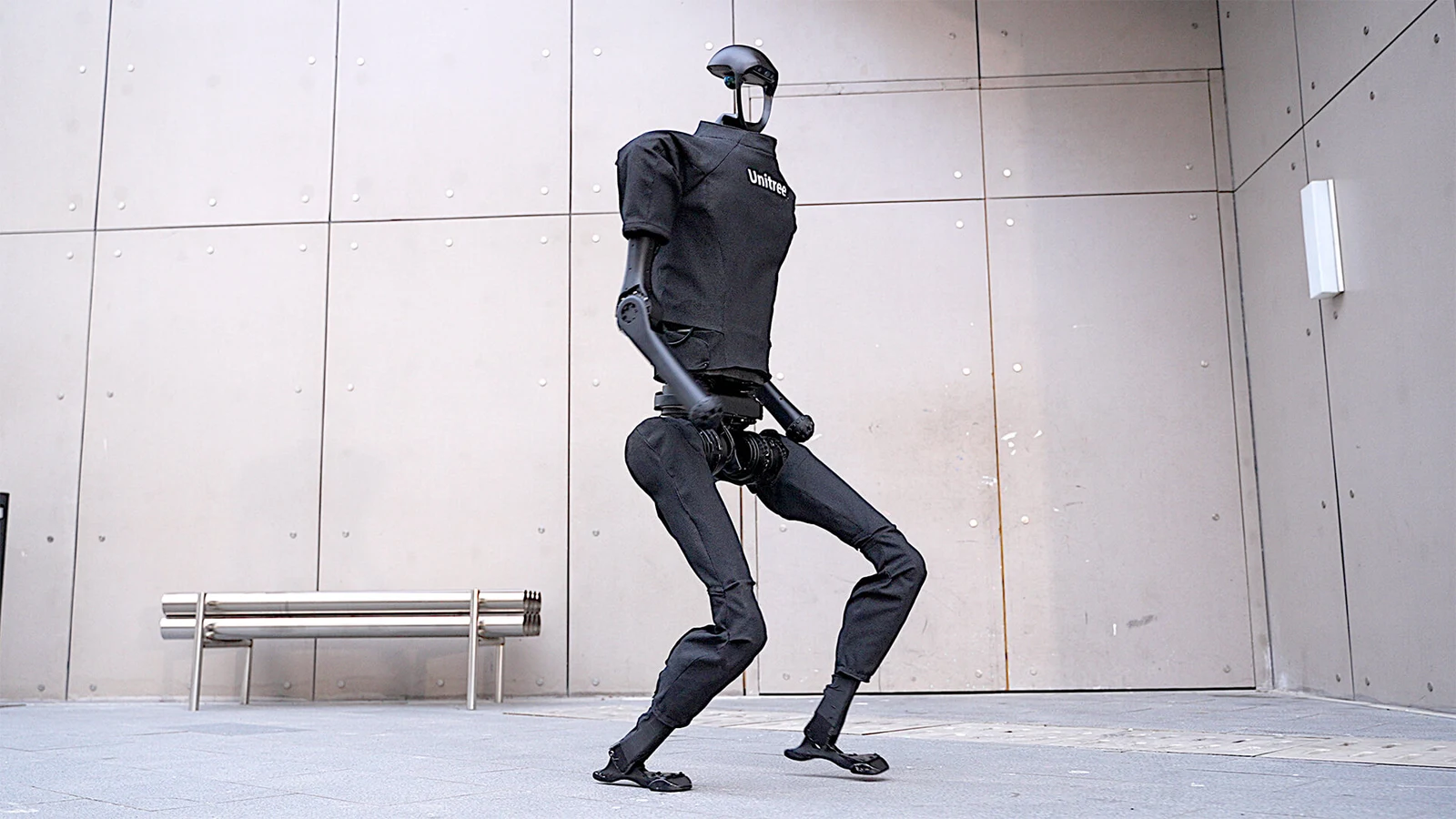
20–26 August 2026 in review. Wang Xingxing described a threshold for robotics’ breakout. Turning that ambition into a useful test requires more than a percentage.
Reader discussion
No comments yet. Add the first thoughtful contribution.
Join the discussion