Unitree G1 can do construction tasks by teleoperation. It is still much slower than a person.
A construction-site study got G1 to carry a tool and paint a test sheet, but the clearest result was the productivity gap: about 18 times slower for transport and three times slower for painting.
Review basis: Analysis based on public information
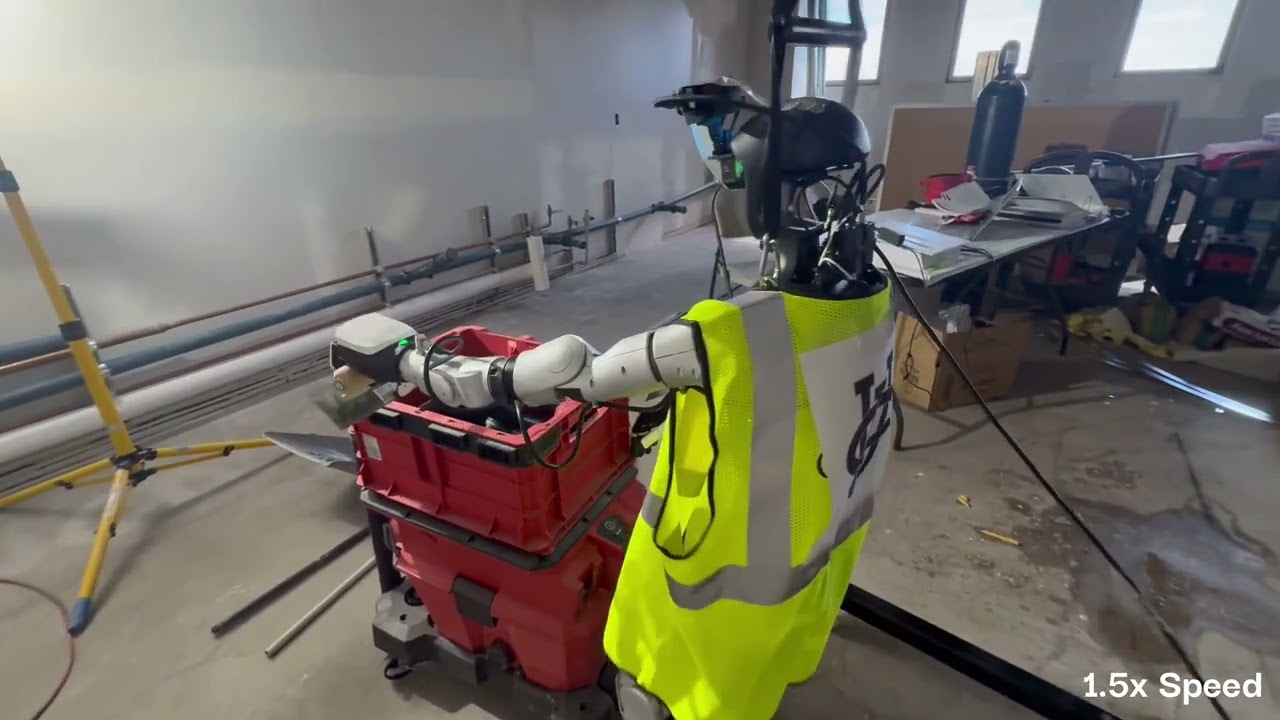
A Unitree G1 has completed two recognisable construction tasks on an active job site: carrying a hand tool about four metres to a bin and applying paint to a test sheet with a roller. The robot completed every transport trial and 80% of the painting trials. It was also dramatically slower than the people controlling it. [S1] [S2]
Across 20 trials per task, teleoperated tool transport averaged 72 seconds. The manual baseline was four seconds, an approximately 18-fold slowdown. Painting averaged 149 seconds through the robot and 47 seconds by hand, a little over three times slower. [S1]
Those numbers make the experiment more useful than a polished demonstration. They show that a humanoid can be guided through work in a real construction environment, while also showing how far the system remains from ordinary human productivity.
A person was doing the thinking
The G1 was not autonomously deciding how to find, grasp and deliver the tool. A seated operator wore a Meta Quest 3 headset, saw stereo video from a camera mounted on the robot and used hand tracking to control its arms and five-finger hands. GLYDR foot pedals commanded walking, turning, squatting and standing. Unitree’s XR teleoperation framework handled upper-body control, while NVIDIA’s GR00T whole-body controller generated lower-body motion. [S1]
That distinction matters. The experiment demonstrates a remote robotic body for a human worker. It does not demonstrate an autonomous robot builder, a general construction policy or a machine that can be left to interpret a job plan.
Teleoperation can still have practical value before autonomy is ready. It may move an operator away from a hazardous area or reduce some physical strain. The research system also records camera, tactile, motor and velocity data in LeRobot format, so every human-guided session can become training material for later imitation learning. [S1]
The 18-times gap is the important result
Tool transport produced the better success rate and the worse time penalty. The robot had to grasp the tool, walk, reposition and release it. Small delays at each stage accumulated into a 72-second average for a task the manual baseline completed in four seconds.
Painting was slower too, but the harder problem was maintaining contact. The study counted a trial as successful only if paint covered at least 90% of the test sheet. Failures were mainly associated with an unsuccessful or unstable grasp on the roller. The researchers also observed motor overheating during extended sessions. [S1]
The operator with prior VR experience completed both teleoperated tasks faster than the novice: 62 versus 83 seconds for tool transport, and 129 versus 169 seconds for painting. That suggests the control interface has its own learning curve, although this small study cannot establish how much practice would close the gap.
It is a feasibility result, not a productivity benchmark
Two operators performed ten trials each for each task. The manual comparison came from the same operators, but the paper reports averages from a limited task set rather than a broad study of tradespeople, sites or robot configurations. The painting task used a test sheet; it was not a room-scale finishing job. [S1]
The study therefore supports a narrow conclusion: full-body teleoperation can get a G1 through simple construction activities in an active-site setting. It does not yet show that the system is commercially productive, economical over a shift or robust across the clutter, tools and changing conditions of normal building work.
The next evidence should be harder to stage: longer sessions, heavier and less conveniently placed objects, varied surfaces, recovery from dropped tools, intervention logs and comparisons that include setup time. Thermal limits and grasp failures need to appear in the results rather than disappear between edited clips.
For now, the strongest case for the system is remote presence and data collection. The G1 can act as a human-controlled construction surrogate, and those demonstrations may help train more autonomous systems later. The experiment also puts a useful number on the present limitation: completing the task is only the first threshold; completing it at a workable pace is the next one.
Sources & analysis
Primary source
Toward Humanoid Robots in Construction: A Teleoperation Feasibility Study UC Irvine and Genova Construction · Published 2026-09-30 · Retrieved 3 October 2026
Primary source
Center Researchers Develop a Humanoid Teleoperation System for Construction Sites UCI Center for Resilient Autonomous Systems · Published 2026-09-25 · Retrieved 3 October 2026
Primary source
Humanoid Robots in Construction: A Teleoperation Feasibility Study — test video UCI Center for Resilient Autonomous Systems · Published 2026-09-25 · Retrieved 3 October 2026
This is an independent, unofficial publication and is not affiliated with Unitree Robotics.
Related reading
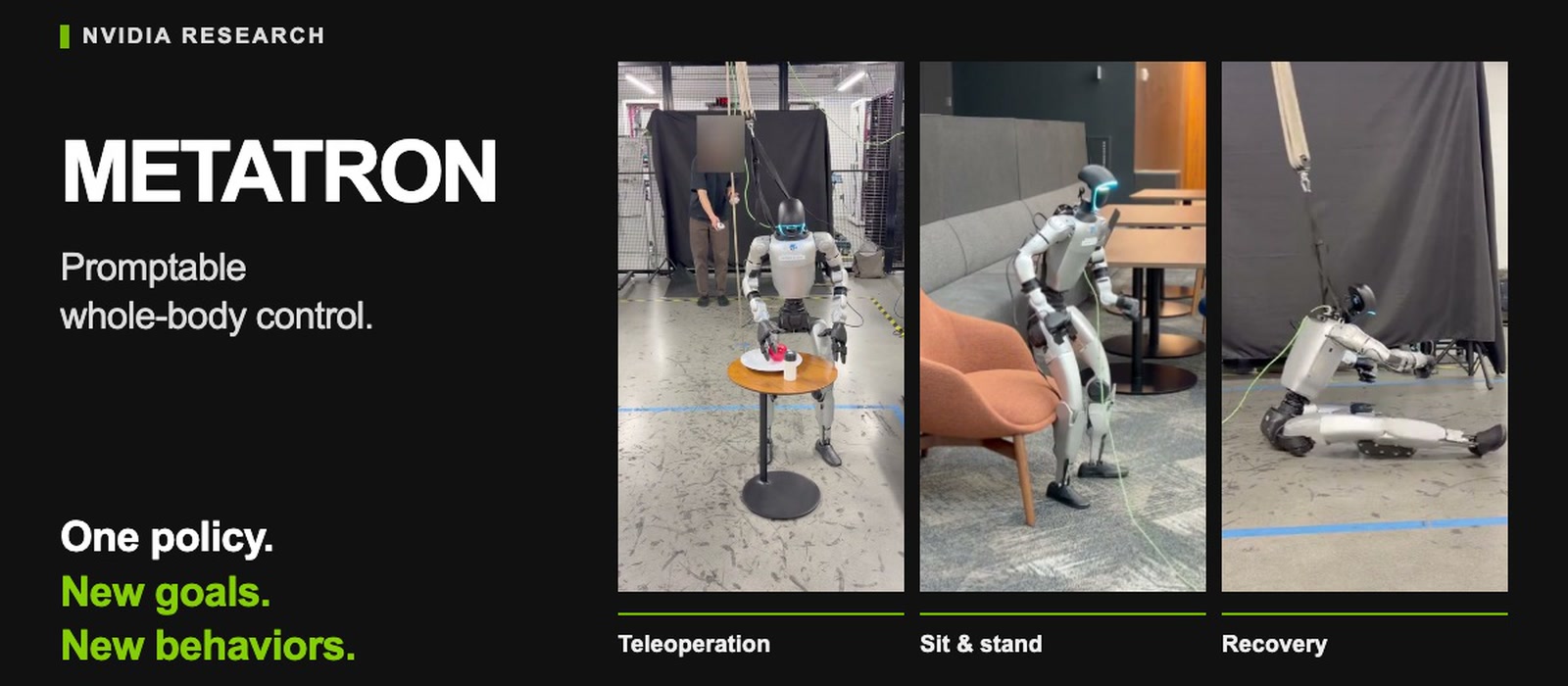
Metatron gives Unitree G1 one frozen controller. The benchmarks are still simulated.
NVIDIA’s policy handles steering, reaching, recovery, teleoperated pickup and sitting through changing goal prompts. Its 83% reaching result and push tests are MuJoCo results, while hardware evidence remains qualitative.
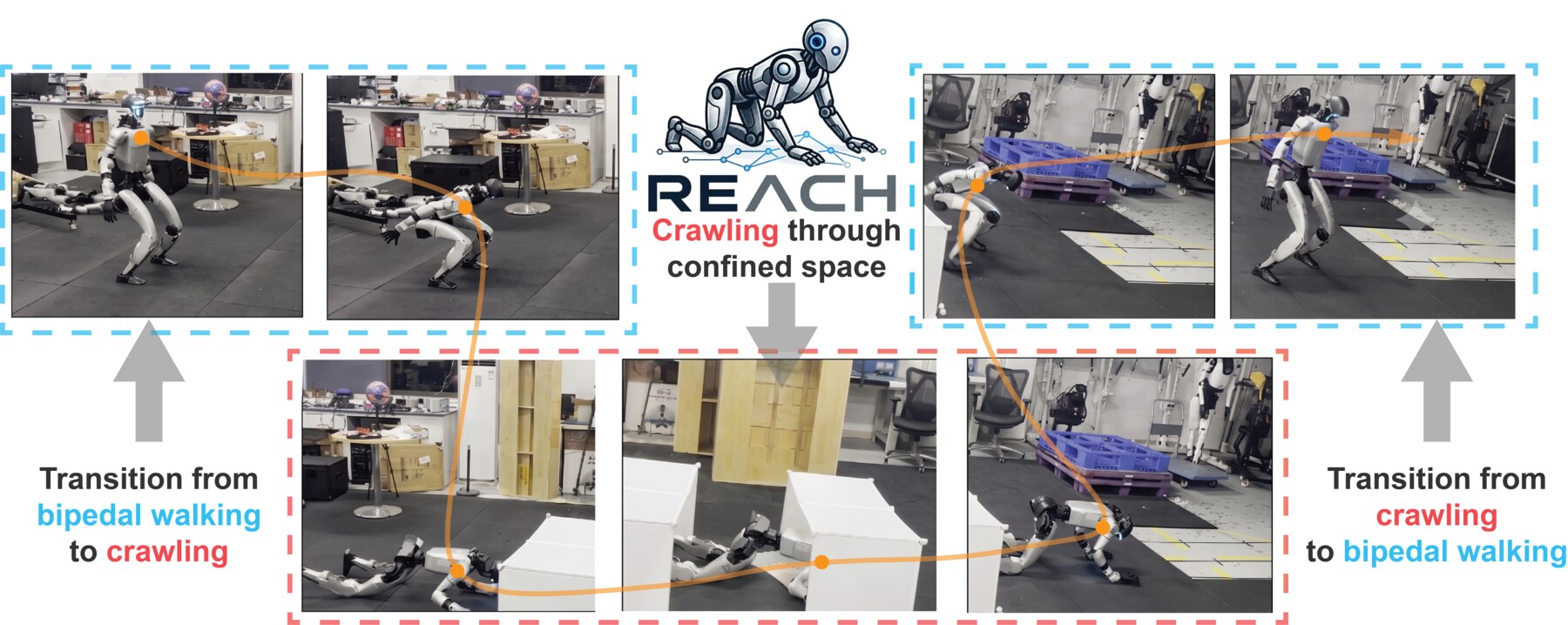
REACH gets Unitree G1 under a 40 cm clearance. The reliability result is narrower.
The system combines LiDAR planning, variable-height walking and crawling. Its 48/50 real-robot transition result is measured; the full confined-space runs are still demonstrations.
Watch Your Step cuts what Unitree G1 needs to see before it steps
A foothold predictor reduces the terrain input from 693 heights to 102 values and reaches the training curriculum roughly three times sooner. Real G1 videos show transfer, not measured reliability.
Reader discussion
No comments yet. Add the first thoughtful contribution.
Join the discussion