An H2-X public failure adds evidence—not a reliability verdict
Attendee footage shows the humanoid falling during a side flip and losing its right lower leg near a joint. Without Unitree’s inspection findings, the video cannot identify the cause or failure rate.
Review basis: Analysis based on public information
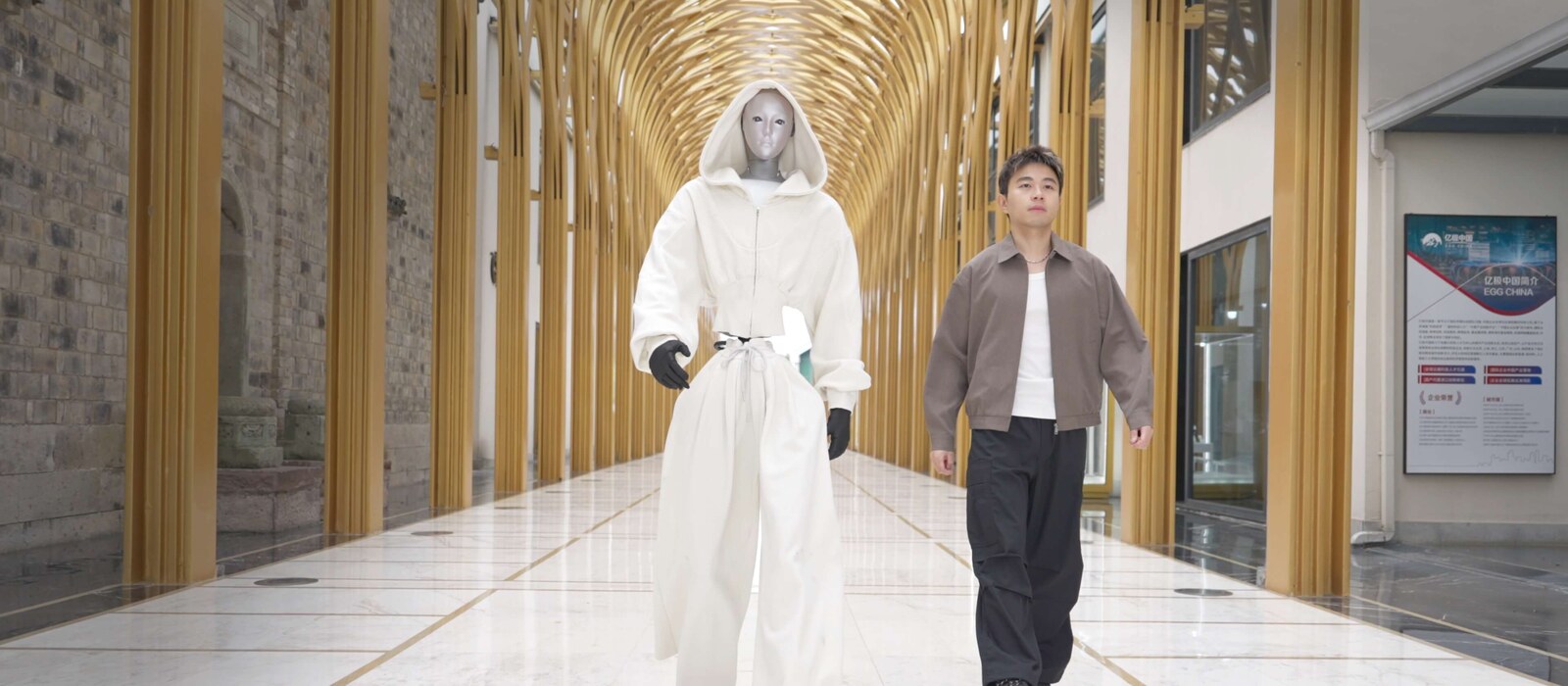
Update — 27 October 2026: Attendee footage from the World Physical AI Conference and Unitree Robotics Partner Ecosystem Conference shows H2-X attempting a side flip on a padded stage on 22 October. It lands off balance, falls sideways and its right lower leg separates near a joint. TechNode published a report and link to the footage on 26 October. The video establishes a visible public failure; it does not establish the failure mechanism, whether the connection had prior damage, or the platform’s overall failure rate.
Unitree had not published an incident explanation in the official sources PHASE reviewed by 27 October. Claims that a control delay, particular fastener, material choice or peak ground force caused the separation remain hypotheses without an inspection report. This evidence strengthens the case for uncut repeated trials and disclosed incident analysis, but one failed manoeuvre is not a reliability study. The original publication date and earlier analysis are retained below.
Update — 25 October 2026: Unitree added an H2-X URDF and 44 associated mesh files to its official unitree_ros repository in a commit dated 23 October. The model defines 31 principal body joints, plus six additional joints representing internal motor mechanisms, and supplies link geometry, inertial values and joint-limit fields. PHASE’s sum of the inertial mass entries is approximately 67.6 kg; that is a value derived from the model, not a weigh-in or a complete product specification. The repository release adds useful engineering evidence, but it does not disclose the battery, eight-hour test method, control mode, software, trial results or safety validation. The original analysis below has been updated only where this release changes what was publicly documented.
Unitree’s latest humanoid video is easy to read as a product launch. It is more accurately a capability teaser.
Published on 21 October 2026, the official “H2-X Kung Fu Legend Guardian” video shows a new H2-labelled variant striking vehicle panels, performing acrobatic descents and appearing in staged guard and rescue scenes. Unitree’s accompanying description makes one quantified claim: maximum endurance of approximately eight hours. At publication, it did not provide an H2-X specification sheet, a price, a release date, a control mode, trial counts or a safety case.
That makes the footage useful evidence of dynamic motion and structural ambition. It is not evidence that H2-X can autonomously protect a person, assess a rescue scene or work safely around the public.
What is actually new
H2-X appears to extend Unitree’s full-size H2 platform toward higher-impact, scenario-driven demonstrations. The edited sequence puts the robot in situations that are more demanding than a dance routine: rapid kicks, hard contacts, recovery from height and a lifting vignette.
The visible result matters. A full-size humanoid that can execute those motions without an obvious external gantry is a serious control and mechanical demonstration. The video also suggests that Unitree wants buyers to imagine the H2 family outside research labs and factory choreography.
The newly released URDF fills in part of the hardware picture. Its 31 principal joints comprise 12 leg joints, three waist joints, two head joints and 14 arm joints. The file also includes six revolute joints for ankle and waist motor mechanisms, bringing the raw count of non-fixed joint elements to 37. Those internal mechanism entries should not be reported as six extra user-controllable degrees of freedom.
The model contains mass and inertia values for 50 links, visual geometry for 48 and collision geometry for 17. It contains no transmission or sensor elements. A URDF is useful for visualisation, kinematics and simulation setup; it is not proof that the physical robot has been weighed to the model total, can deliver every limit value continuously or behaves safely under contact.
Unitree still has not published a complete account of the H2-X actuator models, gearing, battery, sensing, onboard compute or protective hardware. Nor does the video explain whether each sequence was pre-programmed, motion-captured, teleoperated, triggered by a human or generated by an autonomous policy.
H2-X is now better documented as a robot model. It is still not documented as a complete, orderable product with a stated operating envelope.
The eight-hour claim raises a useful question
Unitree says H2-X has a maximum endurance of approximately eight hours. Its current H2 product page lists approximately three hours for the standard H2 and H2 EDU, alongside a 0.972 kWh battery.
Those numbers should not be treated as a direct contradiction. H2-X may use a different battery, a lower-power standby definition, battery swapping or an operating profile unlike the standard H2. The problem is that Unitree has not said which.
“Maximum endurance” also lacks a test protocol. It could mean standing, intermittent movement, low-load patrol, or an internal benchmark. It does not establish eight hours of continuous acrobatics, manipulation or rescue work.
The URDF does not resolve this. It contains no battery model or energy-use test. A useful release would state battery energy, payload, motion duty cycle, ambient conditions, compute load and the point at which the test ended. Until then, eight hours is a manufacturer claim without enough method to compare against another robot—or even against the published H2 figure.
Dynamic motion is not autonomy
The most important missing detail is control.
A robot can reproduce an impressive sequence through a tracked reference motion or a carefully rehearsed policy without recognising people, understanding threats or deciding how to intervene. A teleoperator can also supply the perception and judgement while the robot supplies the force. Neither case is equivalent to autonomous guarding or rescue.
Unitree does not identify the H2-X control stack in the video description or the new model files. It publishes no perception benchmark, decision latency, false-positive rate, fall rate or recovery rate. There is no uncut run, no repeated-trial table and no independent observation.
The careful conclusion is therefore narrow: Unitree shows H2-X executing high-dynamic motions and staged physical interactions on camera. The public evidence does not establish autonomous threat assessment, autonomous rescue planning or repeatable operation outside the filmed conditions.
The rescue scenes are scenarios, not deployments
The video’s rescue imagery is particularly easy to overread. A staged lift involving a vehicle is evidence that the robot can contribute force in that setup. It is not evidence that the system can locate a casualty, determine whether lifting is safe, stabilise a vehicle, coordinate with responders or avoid worsening an injury.
The same applies to the guard scenes. Interposing a robot in a choreographed encounter does not establish that it can distinguish an attack from ordinary human motion, select proportionate action or fail safely when perception is wrong.
No emergency service, security provider or customer deployment is identified. Unitree does not report certification, supervised field trials or operational training. The 23 October repository addition is developer documentation for the robot model, not an operating manual or a safety case.
Why this matters in Australia
For an Australian buyer, the distinction between a dramatic demo and deployable plant is practical, not semantic.
Safe Work Australia says businesses must manage health and safety risks from AI and digital technologies as far as reasonably practicable, as they would for any other hazard. A full-size humanoid operating near workers would need risk controls built around its real failure modes, not its best edited run.
The existing H2 page itself warns users to keep people at a sufficient distance, describes the product as a civilian robot and says some example functions are still under development. It lists a mass of about 70 kg, 31 joints, maximum leg-joint torque of 360 N·m and an arm payload of about 7 kg rated and 15 kg peak. Those are H2 specifications, not confirmed H2-X specifications, but they show why exclusion zones, emergency stops, speed and force limits, supervision and maintenance records cannot be afterthoughts.
Before any Australian workplace pilot, a credible H2-X package would need at least a variant-specific manual, operating envelope, stopping behaviour, battery and thermal data, control-mode disclosure, repeated-task reliability, fault logs and a method for keeping people clear of hazardous motion. A cinematic clip and robot-description file supply none of that.
What would change the assessment
The URDF is a useful first release because it makes the H2-X geometry and nominal dynamics available to developers. It does not answer the questions that matter most for deployment.
Unitree could next publish a complete H2-X data sheet and explain the eight-hour test. It could disclose whether the filmed tasks were autonomous, scripted or teleoperated, with uncut repeated trials. It could also document safety functions and the intended operating environment.
Independent testing would matter after that. A third party reproducing the motions, measuring failures and examining stops under disturbance would tell buyers much more than another montage.
For now, H2-X is notable because Unitree is demonstrating greater force, speed and scenario ambition in a full-size humanoid—and has now released a machine-readable body model. The same qualities increase the importance of control transparency and safety evidence. The public record is more useful than it was on 21 October, but it still does not show what an operator can responsibly rely on.
PHASE reviewed Unitree’s official H2-X video, the H2 product page, the H2-X URDF commit, attendee footage of the public failure, TechNode’s report and Australian workplace-safety guidance through 27 October 2026. This is analysis of public information, not a hands-on test.
Sources & analysis
Primary source
Unitree Introducing: H2-X Kung Fu Legend Guardian Unitree Robotics · Published 2026-10-21 · Retrieved 22 October 2026
Primary source
Unitree H2: specifications and safety notices Unitree Robotics · Retrieved 22 October 2026
Primary source
Artificial intelligence and digital technologies: WHS duties Safe Work Australia · Retrieved 22 October 2026
Primary source
add H2-X urdf Unitree Robotics · Published 2026-10-23 · Retrieved 24 October 2026
Primary source
Attendee video of H2-X public demonstration failure Douyin attendee footage · Retrieved 26 October 2026
Secondary reporting
Unitree’s newly launched H2-X Robot loses a leg in public demonstration TechNode · Published 2026-10-26 · Retrieved 26 October 2026
This is an independent, unofficial publication and is not affiliated with Unitree Robotics.
Related reading
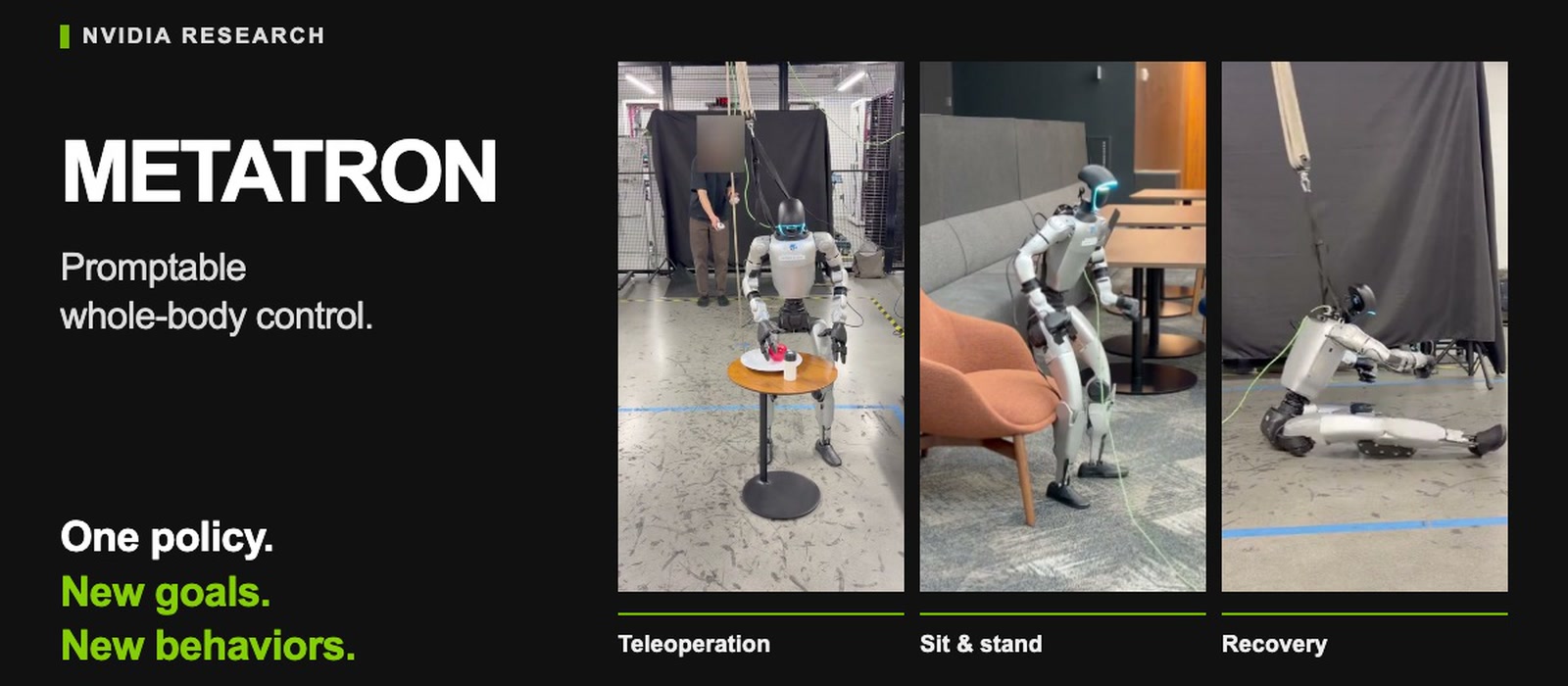
Metatron gives Unitree G1 one frozen controller. The benchmarks are still simulated.
NVIDIA’s policy handles steering, reaching, recovery, teleoperated pickup and sitting through changing goal prompts. Its 83% reaching result and push tests are MuJoCo results, while hardware evidence remains qualitative.
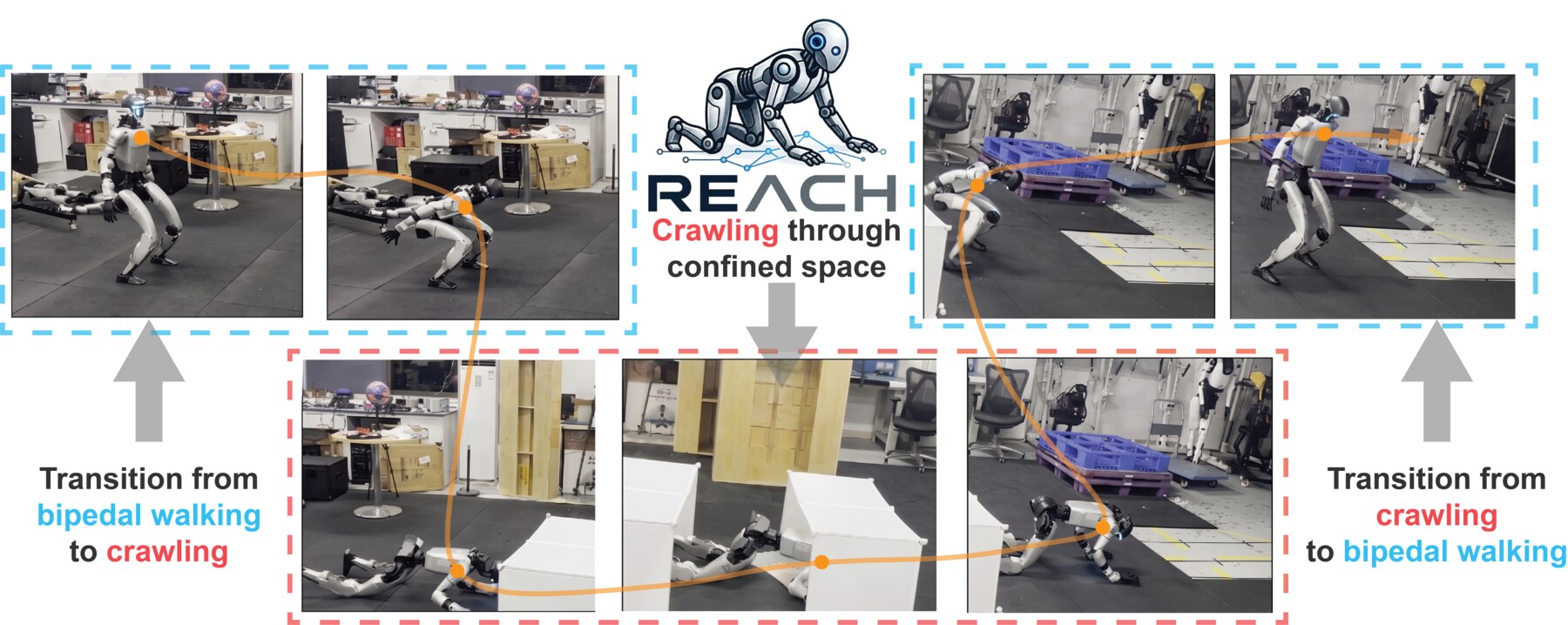
REACH gets Unitree G1 under a 40 cm clearance. The reliability result is narrower.
The system combines LiDAR planning, variable-height walking and crawling. Its 48/50 real-robot transition result is measured; the full confined-space runs are still demonstrations.
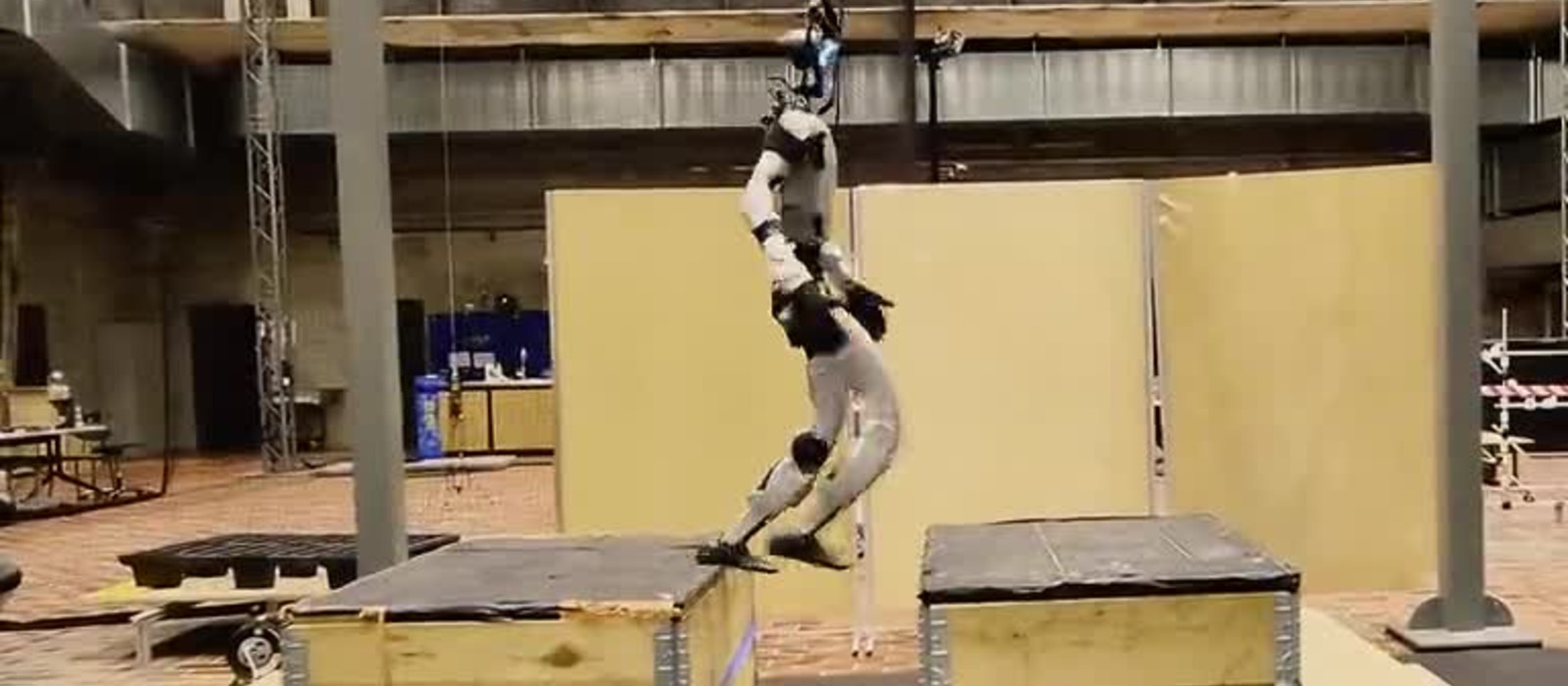
Watch Your Step cuts what Unitree G1 needs to see before it steps
A foothold predictor reduces the terrain input from 693 heights to 102 values and reaches the training curriculum roughly three times sooner. Real G1 videos show transfer, not measured reliability.
Reader discussion
No comments yet. Add the first thoughtful contribution.
Join the discussion