Unitree goes public. The harder test comes next.
Its 19 August Shanghai listing is a milestone for the robot maker. Turning public-market attention into useful, dependable machines is a different challenge.
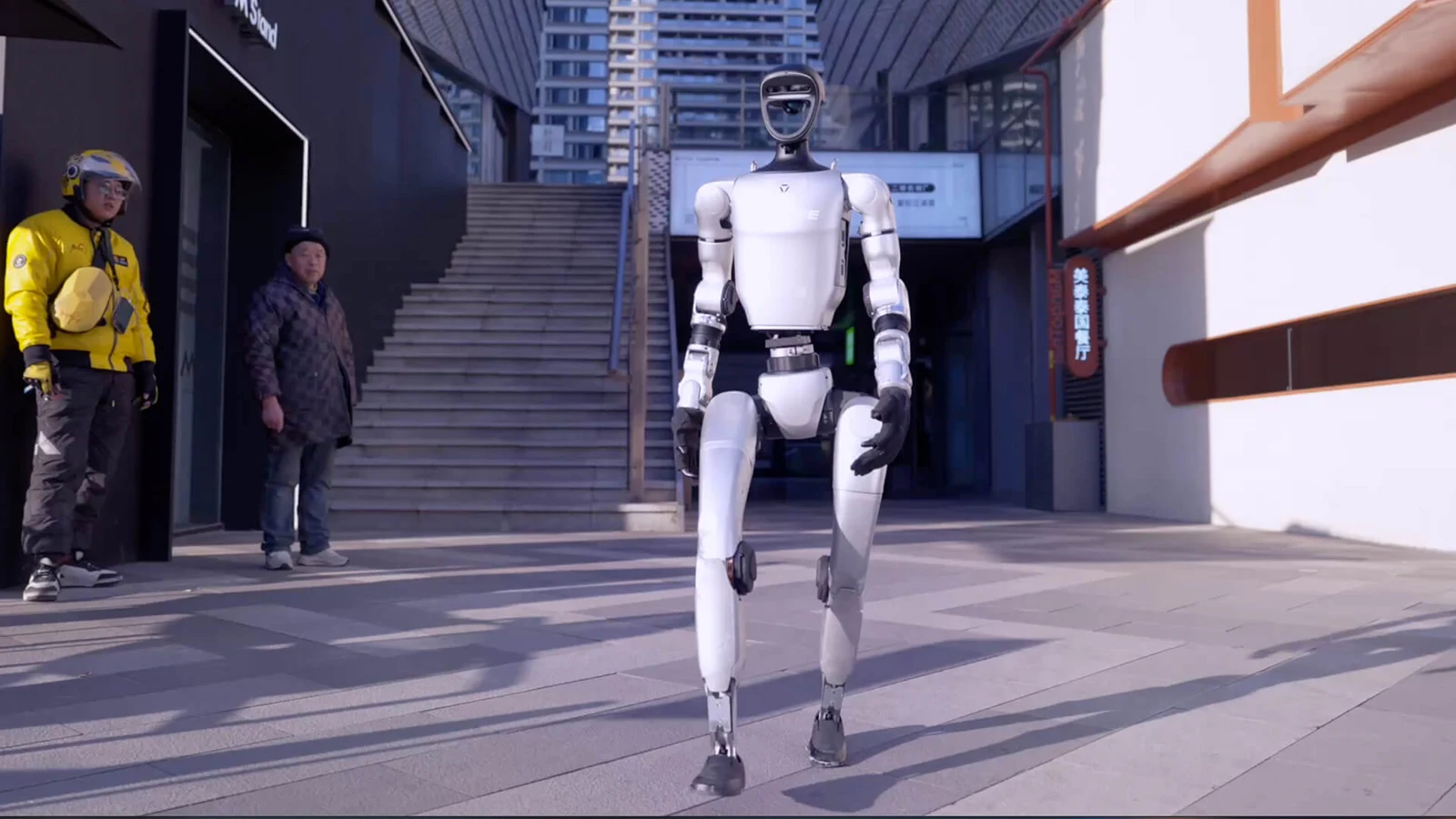
Unitree began trading on the Shanghai Stock Exchange’s STAR Market on 19 August 2026 under stock code 688836. The exchange’s notice, issued the previous day, identifies the company as 宇树科技 and confirms the start of trading. For a manufacturer followed as closely for its robot demonstrations as for its commercial prospects, the listing brings a new audience: public shareholders. [S1]
The market reaction was striking. Associated Press reported that the shares finished their debut session 460% above the offer price, at 845 yuan, and that the offering raised approximately 6.1 billion yuan. Those are historical debut figures, not current quotations or a valuation endorsed by PHASE. [S2]
The distinction matters. A successful flotation demonstrates access to capital and investor appetite. It does not, by itself, establish that a robot can perform useful work reliably in an unfamiliar environment.
What is now public
The exchange announcement provides a precise starting point for following the company: its listing venue, security code and trading date. It records total A-share capital of approximately 404.46 million shares, with approximately 30.09 million shares admitted to trading from the debut date. Those quantities describe different things; the initial tradable amount should not be mistaken for the entire company’s share capital. [S1]
For readers assessing Unitree over time, the useful habit is to return to dated exchange disclosures and company reports, rather than treating a moving share price as a summary of technical progress. Revenue, product mix, research expenditure and cash generation each answer a different question. None should be collapsed into a single claim that robotics has arrived.
A company with more than one kind of robot
Unitree’s overseas product pages cover both humanoid and quadruped platforms. Its G1 page distinguishes standard and education configurations, with differences in hardware options and development capability. The Go2 page likewise separates configurations rather than presenting every advertised feature as universal. These are manufacturer descriptions, not PHASE test results. [S3] [S4]
That configuration detail is commercially important. A robot body, a development platform and an operational system that completes a customer’s task are not interchangeable purchases. The software access, sensors, end effectors and integration work included in a quotation can matter as much as the model name.

PHASE’s view: watch the work, not just the performance
The next useful evidence will concern repeatable work. How often can a system finish the same task? What changes when the objects, lighting or layout are different? How much operator assistance is required, and how quickly can it recover from failure? These are questions to ask of any robotics company, including Unitree.
Public-market interest can support ambitious development, but expectations also need a clear boundary. An edited demonstration may show an impressive capability under particular conditions. It cannot establish continuous reliability, an acceptable intervention rate or a workable cost per completed task. Those require operational evidence.
For PHASE SHIFT, the implication is straightforward: a listing is not an automatic reason to raise the index. Our assessment concerns progress towards broadly useful physical intelligence. Financing and market attention provide context; the capabilities of the machines still have to be assessed separately.
What Australian buyers should take from it
A stock-exchange listing does not verify an Australian supplier’s authorisation, local inventory, warranty obligations or repair capability. Prospective buyers should still request a written configuration, delivered cost, support scope and explanation of who is responsible when equipment needs servicing.
For a university, that may mean clarifying developer access and reproducible experiments. For a business, it means defining the job, supervision requirements and acceptance test before committing to a platform. The purchase decision should rest on what the supplied system can do for that customer.
Unitree’s flotation is an important business milestone. Whether it becomes an equally important milestone for useful robotics will depend on the evidence that follows.
Editorial note: this retrospective article was prepared with AI assistance and published at the operator’s direction. PHASE retains editorial responsibility. It covers the 19 August listing; the publication date above records when this article first appeared. This is general information and analysis, not investment advice.
Sources & analysis
Primary source
SSE: announcement of Unitree’s STAR Market listing Shanghai Stock Exchange · Published 2026-08-18 · Retrieved 14 September 2026
Secondary reporting
Shares in Chinese humanoid robot maker Unitree soar in its Shanghai trading debut Associated Press · Published 2026-08-19 · Retrieved 14 September 2026
Primary source
Unitree G1: manufacturer product and configuration information Unitree Robotics · Retrieved 14 September 2026
Primary source
Unitree Go2: manufacturer product and configuration information Unitree Robotics · Retrieved 14 September 2026
This is an independent, unofficial publication and is not affiliated with Unitree Robotics.
Related reading
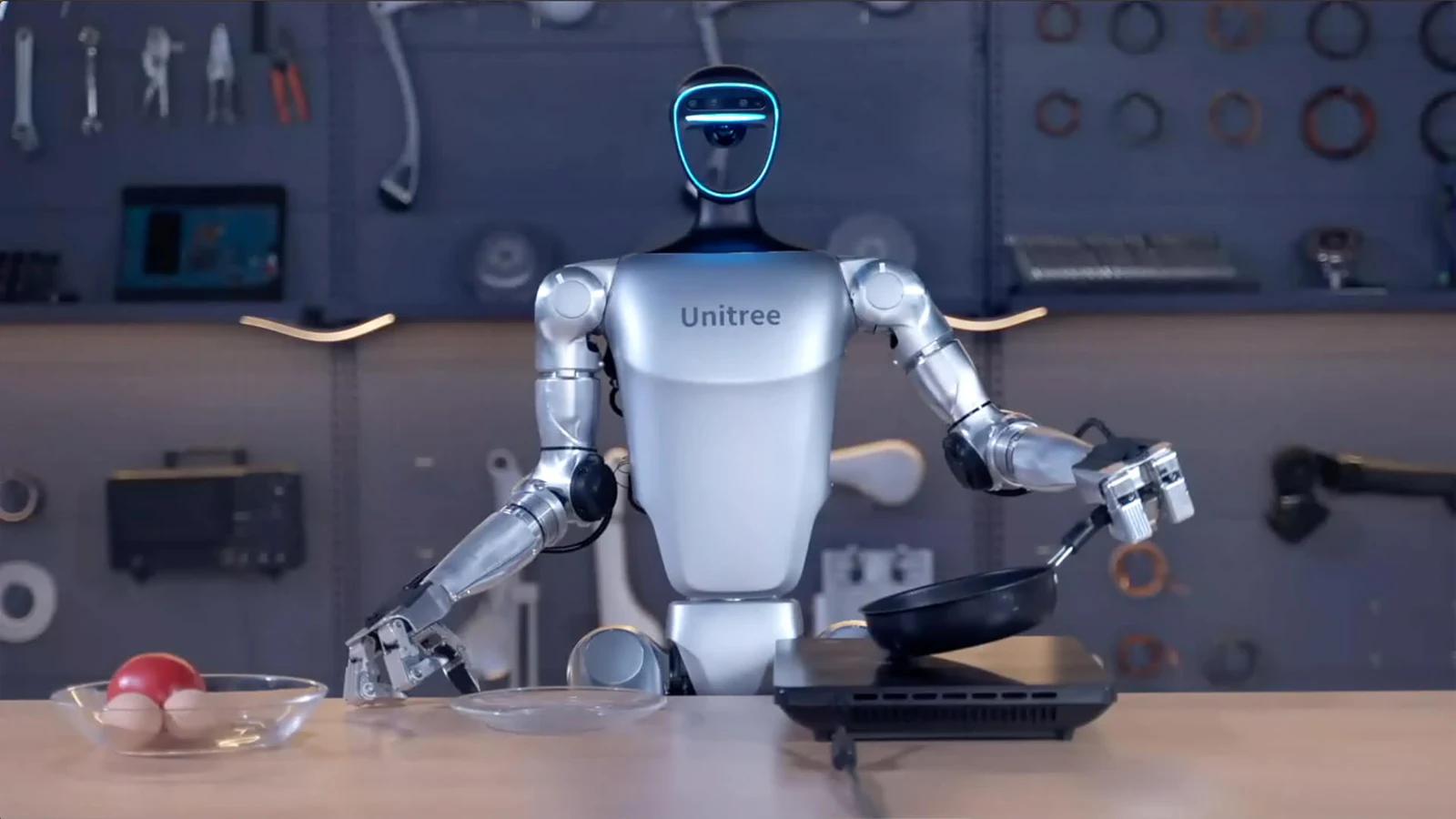
G1+ puts the upgrade question in the sensors, not just the motors
10–16 September 2026, reviewed through 14 September. A reading of Unitree’s current G1+ specification highlights sensing, configuration and developer access—the details that matter before an upgrade.
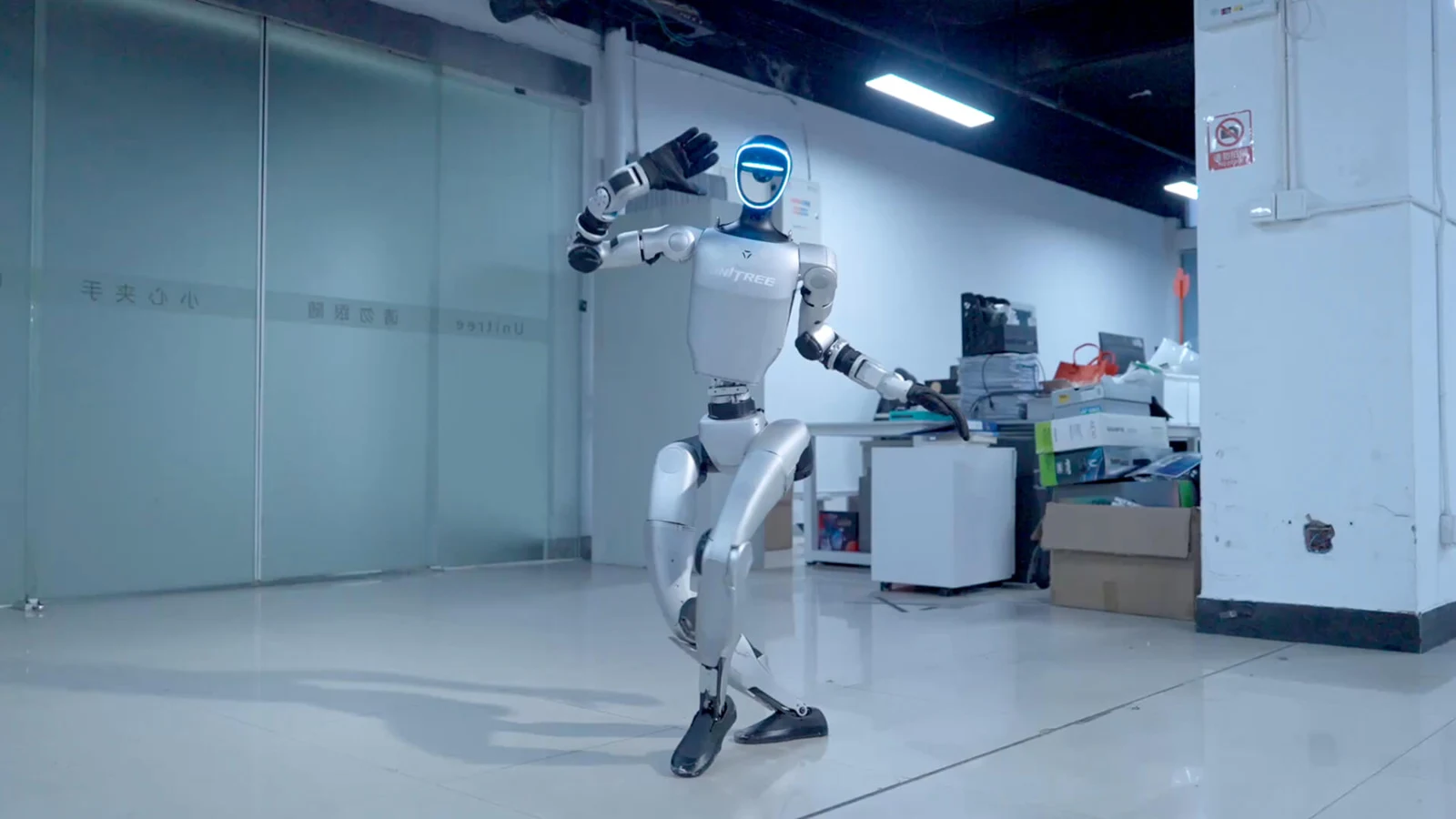
Unitree’s autonomous combat claim needs evidence beyond the ring
3–9 September 2026 in review. The UnifoLM-X2-1.0 announcement put real-time interaction in the spotlight. The next questions concern the test conditions, supervision and transfer to useful tasks.
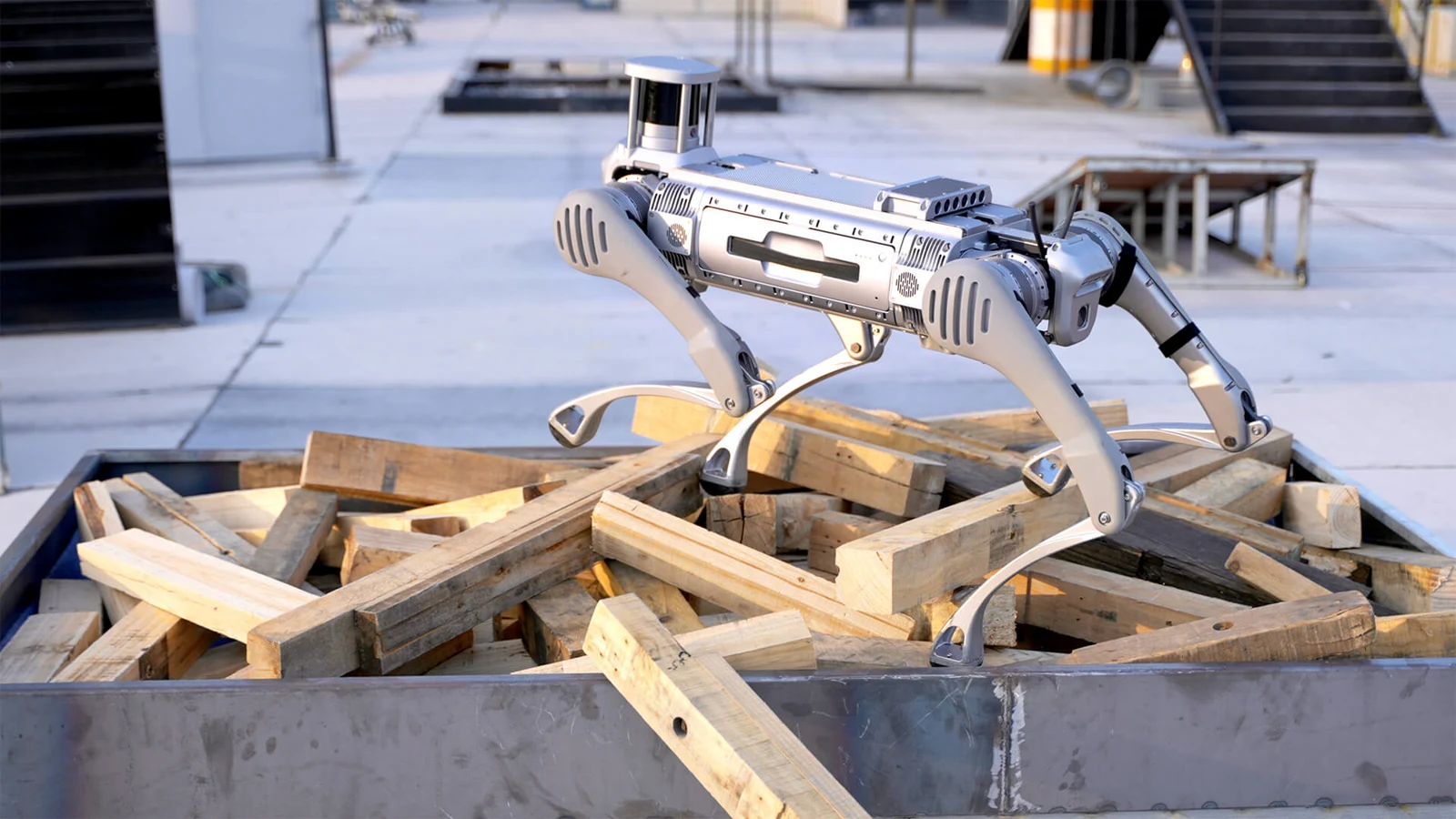
Unitree’s IPO created paper wealth. That is not the same as cash for robotics.
27 August–2 September 2026 in review. Attention shifted to the shareholders behind Unitree. The useful distinction is between a valuable stake and resources available to build the business.
Reader discussion
No comments yet. Add the first thoughtful contribution.
Join the discussion