Unitree UnifoLM-WLA-1.0: what is actually open now?
The September 20 code release makes action-expert training possible with earlier ER weights. It does not yet provide the complete WLA-Base checkpoint or a turnkey reproduction of Unitree’s robot demonstrations.
Review basis: Analysis based on public information
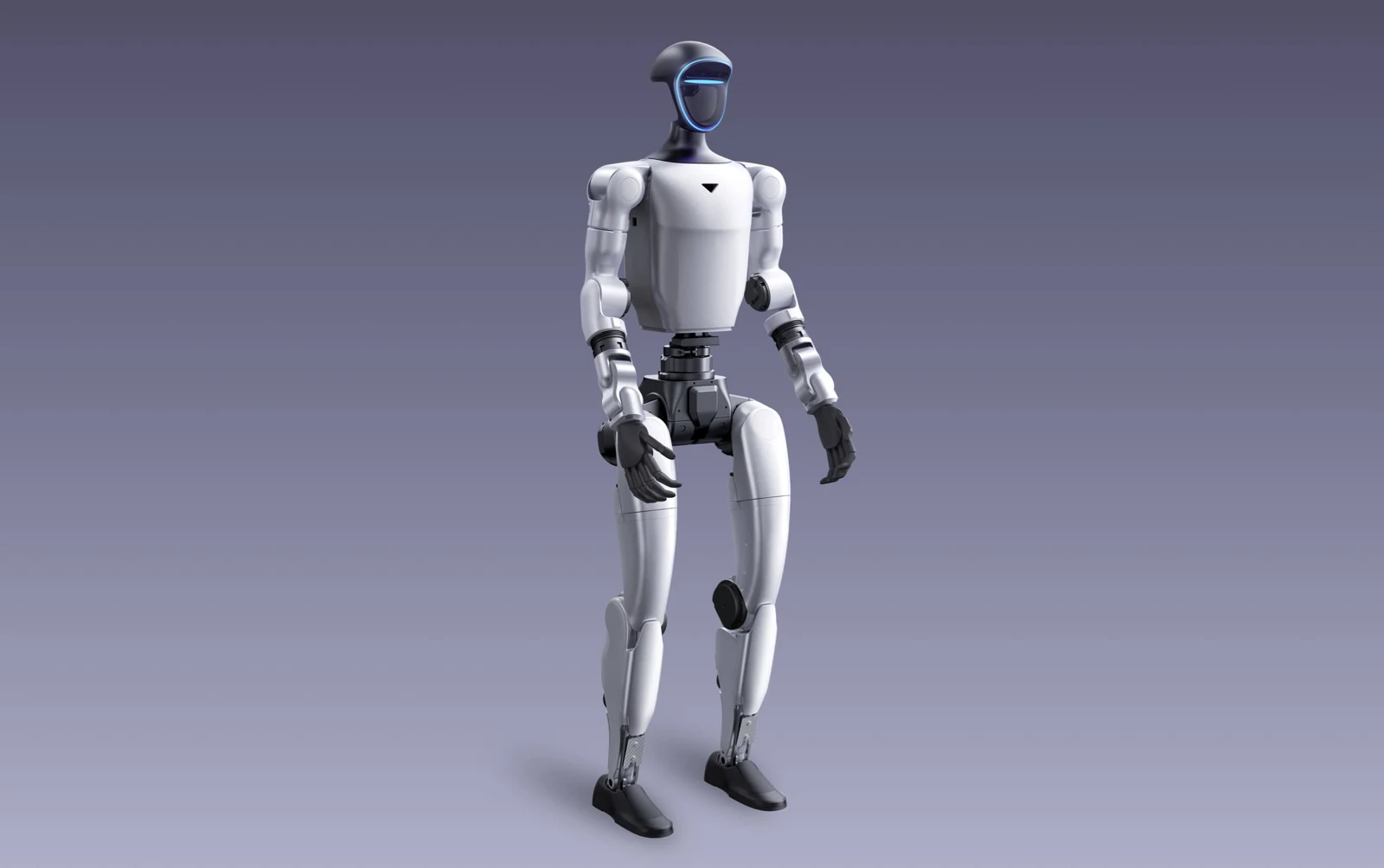
The most consequential UnifoLM-WLA-1.0 update since its announcement is not another robot video. On 20 September, Unitree said it released model modules and code for training an action expert. The repository now supplies a training guide and a processing specification; the UnifoLM-ER-1 and ER-Flow weights had already been released on 11 September. That is a more usable research starting point than a project page alone, but it is not the same thing as releasing the complete model shown in the demonstrations. [S1] [S2] [S3]
The distinction matters because “open source” describes several different things here: a vision-language backbone, an action-generating component, training code, robot data and a trained whole-body policy. A researcher can work with some of those pieces today. Others remain on Unitree’s release plan.
What a developer can obtain
Unitree links to downloadable UnifoLM-ER-1 and UnifoLM-ER-Flow model repositories. Their model cards identify them as 4B-parameter models. ER-1 is the embodied-reasoning vision-language model; ER-Flow adds representations for predicted scene changes and discrete actions. Neither weight set should be described as the advertised 6B UnifoLM-WLA-1.0 whole-body policy. [S1] [S4] [S5]
The new guide describes a concrete path to train an action expert from scratch on top of either ER model. It tells users to point the launch script at a local backbone, arrange Dex1 and whole-body-task data, edit the multi-source dataset configuration and run the MMDiT training script. The repository includes Python packaging and a lockfile. Its guide says the script uses the GPUs detected on a node by default; this is research training code that requires substantial local data, compute and configuration, not a one-click robot application. PHASE has inspected the public instructions but has not run the training or tested a trained policy on hardware. [S1] [S2]
One useful technical release is the action-and-state specification. It defines a 54-dimensional unified action vector, a 60-dimensional robot state, validity masks for absent modules and a 120-dimensional state-projector input formed from state plus mask. It also fixes coordinate, normalization and sampling conventions. Those details make cross-dataset training less ambiguous; they do not by themselves show that a resulting controller works across hands, tasks or robots. [S3]
What is still missing
The repository lists UnifoLM-WLA-Base, code for fine-tuning that base model and LoRA fine-tuning as planned items, without corresponding released links. Unitree’s WLA collection currently points to the ER weights and dataset collections, not a WLA-Base checkpoint. A publicly downloadable pretrained WLA action expert or an end-to-end deployment recipe for reproducing the project-page G1 demonstrations is not identified in the current repository documentation. This is a statement about the material PHASE could verify on 26 September, not a claim that Unitree has no internal model or that further releases will not follow. [S1] [S2] [S6]
The dataset links are meaningful, but their existence does not establish that the full training mixture, selection, preprocessing and evaluation setup behind the advertised system is public. The project page says the WLA model was trained on approximately 2,500 hours of real-robot data and performs 64 tasks, including ten whole-body and 54 tabletop tasks. It presents robot-test videos and describes an ER-Flow backbone with an MMDiT action expert. These are Unitree’s claims and demonstrations; PHASE has not independently verified the hours, task count, success rates or transfer to a different setup. [S1] [S6] [S7]
The practical reading is therefore neither “just an announcement” nor “the complete humanoid policy is open.” The September releases give researchers weights for the ER backbones, model components, training code, data links and unusually explicit action/state conventions. The decisive missing comparison is still a released WLA-Base checkpoint, accompanied by enough inference, deployment and evaluation detail for outsiders to reproduce the claimed whole-body behaviour. Until then, the public stack is a route to build and test an action expert, not the finished 64-task system in a download. [S1] [S2] [S3] [S6]
Sources & analysis
Primary source
UnifoLM-WLA-1.0 repository and release plan Unitree Robotics
Primary source
Training an Action Expert from Scratch Unitree Robotics
Primary source
Robot Action, State, and Statistics Processing Specification Unitree Robotics
Primary source
UnifoLM-ER-1 model card Unitree Robotics
Primary source
UnifoLM-ER-Flow model card Unitree Robotics
Primary source
UnifoLM-WLA-1.0 model and dataset collection Unitree Robotics
Primary source
UnifoLM-WLA-1.0 project page Unitree Robotics
This is an independent, unofficial publication and is not affiliated with Unitree Robotics.
Related reading
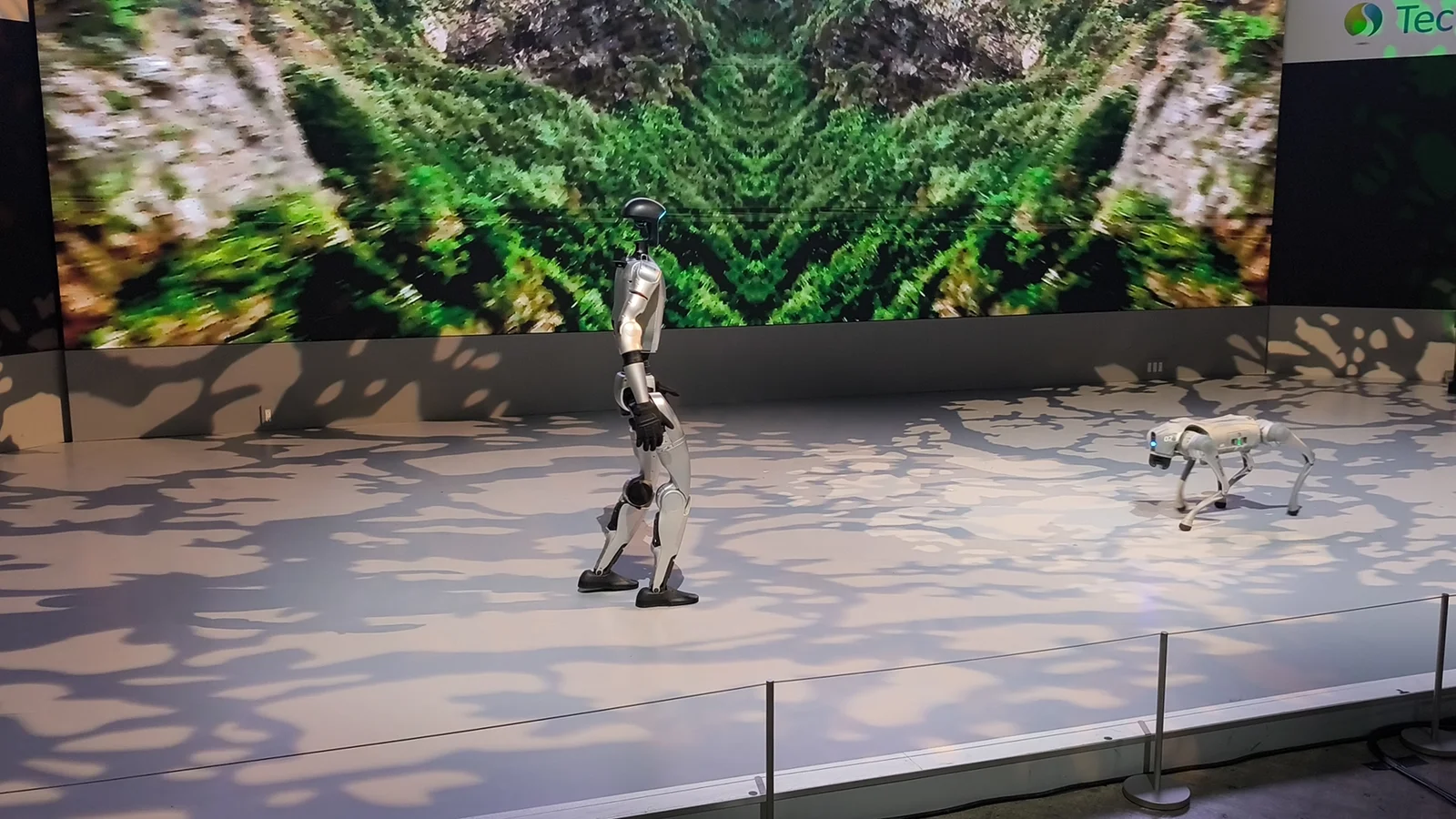
QUT is taking its Unitree G1 to Brisbane Festival. The real test is human-robot interaction.
QUTie’s motion-captured wellness routine will put a humanoid in front of a festival crowd on 22–23 September. The choreography is the easy part; how people choose to approach, follow and trust it is more revealing.
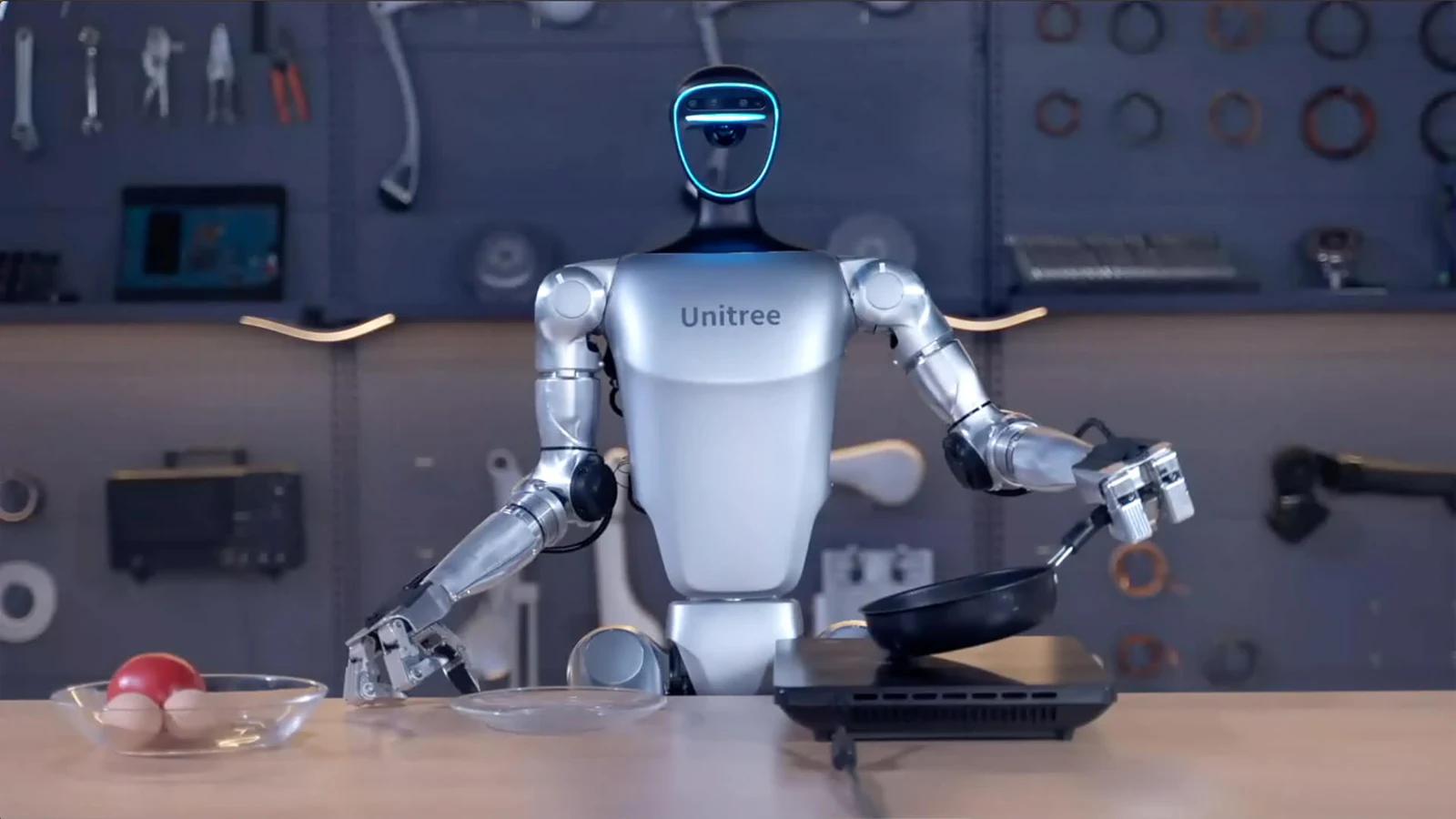
G1+ puts the upgrade question in the sensors, not just the motors
10–16 September 2026, reviewed through 14 September. A reading of Unitree’s current G1+ specification highlights sensing, configuration and developer access—the details that matter before an upgrade.
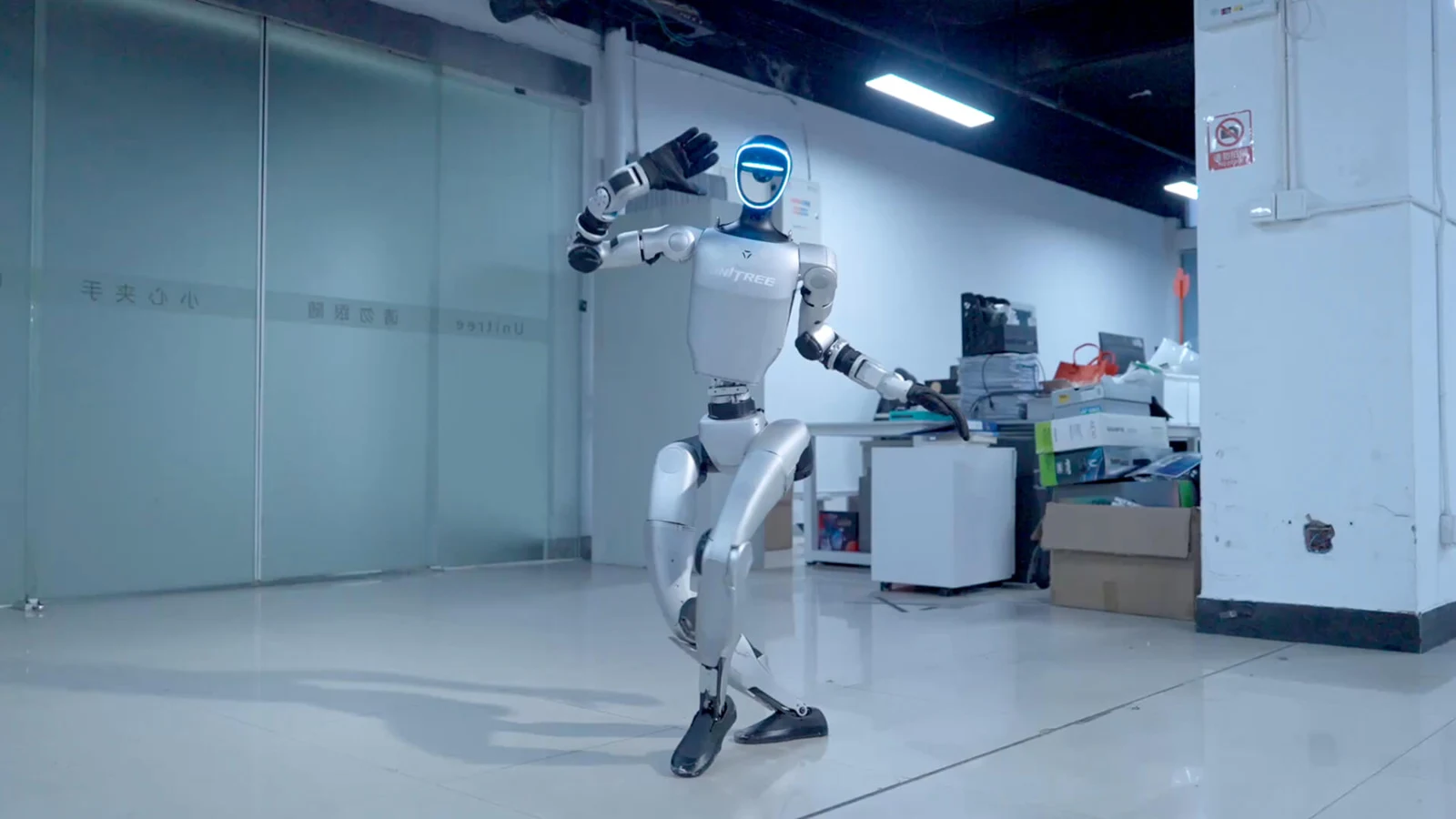
Unitree’s autonomous combat claim needs evidence beyond the ring
3–9 September 2026 in review. The UnifoLM-X2-1.0 announcement put real-time interaction in the spotlight. The next questions concern the test conditions, supervision and transfer to useful tasks.
Reader discussion
No comments yet. Add the first thoughtful contribution.
Join the discussion