Unitree opens its GPT-6 robot skills. The two-year forecast still lacks a benchmark.
Official code now shows GPT-6 Astra coordinating four G1-D and R1-D skills through cameras, bounded tools and task instructions. The edited demos still provide no trial counts or generalisation benchmark.
Review basis: Analysis based on public information
Update — 1 November 2026
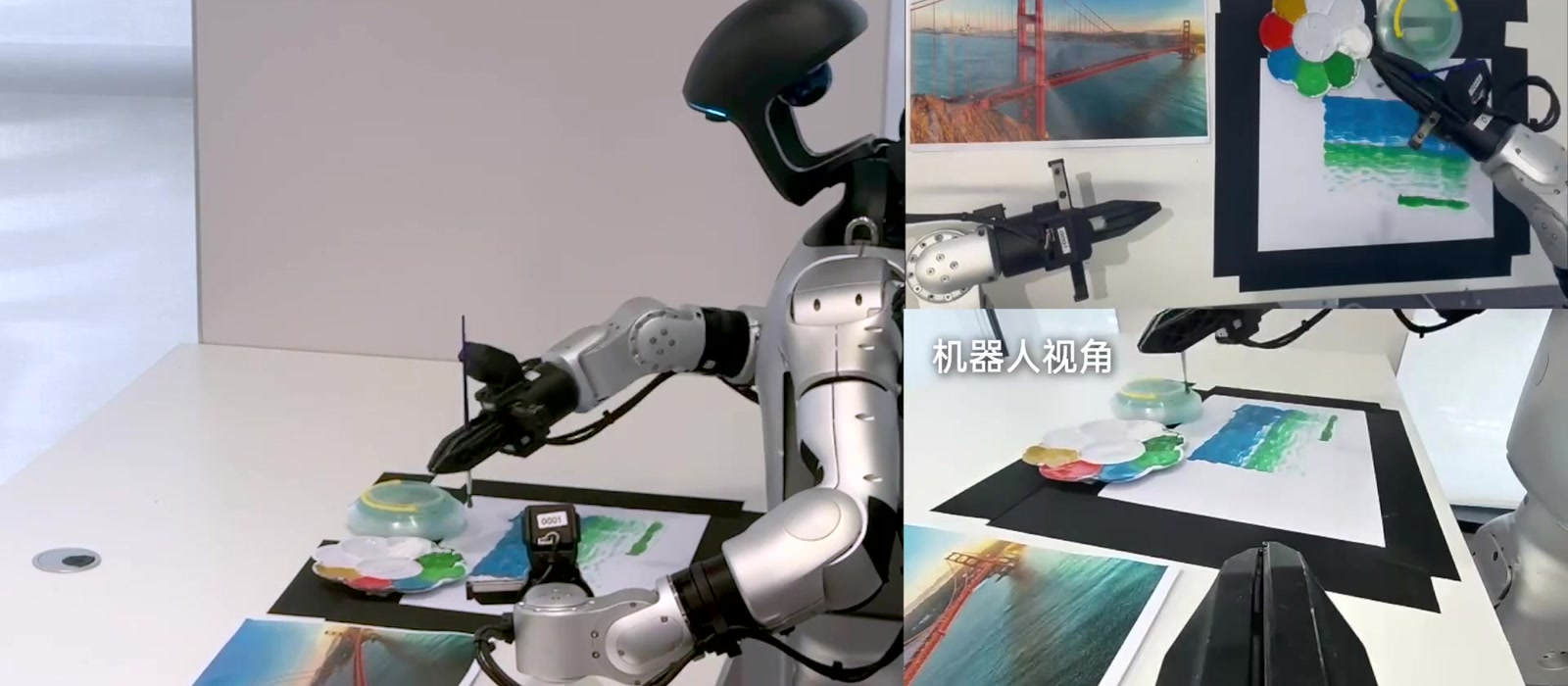
Unitree published its RobotSkills repository on 28 October, making the integration behind four GPT-6-labelled demonstrations substantially more inspectable. The release is useful evidence of an engineering architecture. It is not a reliability benchmark, and it does not validate the one-to-two-year forecast discussed in the original analysis below. [S9]
The public release is a skill framework, not a benchmark
RobotSkills connects frontier models, including what Unitree identifies as GPT-6 Astra and Claude Opus, to Unitree robots through cameras and bounded software tools. The published architecture follows an observe–reason–act–verify loop: the model reads camera frames, reasons about a task, calls tools exposed through Unitree SDK2 or DDS, then observes the result. Task knowledge and tool instructions are packaged in SKILL.md files. [S9] [S10]
That answers one question left open on 15 October. At least in these public examples, the model is not presented as a single controller learning every movement from scratch. It is coordinating prepared perception, planning and motion components. This can still be valuable: a general model may reduce the bespoke orchestration required to combine those components. But the achievement should be described as a model-directed skill system, not as proof that a general-purpose robot can perform arbitrary physical tasks.
The repository includes code and instructions for four demonstrations.
Drawing: G1-D measures the paper and materials, plans strokes, compiles trajectories offline and executes them through the robot SDK. [S11]
Gomoku: G1-D uses four camera views to read a 19×19 board, chooses a move, picks up a stone and places it with the right arm. The published skill asks a person to confirm before the gripper releases the stone. [S12]
Chinese chess: G1-D uses both hands and the Fairy-Stockfish chess engine, including handling captured pieces.
Navigation: R1-D or G1-D receives navigation objectives through MCP tools, observes while moving, records places and can return to them.
These are concrete, inspectable integrations. They are not four clean tests of an unassisted model. Chess delegates game search to a specialised engine; drawing relies on measured geometry and offline trajectory compilation; Gomoku includes a human confirmation step; navigation depends on mapped software tools and a prepared robot stack. None of those qualifications makes the demonstrations meaningless. They define what was actually demonstrated.
What the videos still cannot establish
Unitree explicitly says the videos are sped up and that some model-reasoning and network waiting time has been removed. [S9] That disclosure is helpful, but it also means the clips cannot support claims about end-to-end completion time.
The repository does not report repeated-trial counts, failed attempts, recovery rates, physical resets, human interventions or results on objects and rooms withheld from development. PHASE could not identify an independent reproduction as of 1 November. A successful edited run therefore remains a demonstration, not a measured success rate or evidence of commercial deployment.
The safety documentation reinforces that distinction. It requires matching hardware and software versions, validated coordinates and units, current calibration, a cleared work area, people on site and an accessible hardware emergency stop. It also states that a software stop is not a substitute for the hardware emergency stop. [S13] Those are responsible operating instructions; they also describe a supervised research setup rather than an autonomous service operating without local oversight.
What changed — and what did not
The evidence position has improved. Readers can now inspect the high-level architecture, skill descriptions, dependencies and parts of the task-specific implementation. The earlier statement that Unitree had not described its GPT-6 integration is no longer complete.
The central benchmark gap remains. RobotSkills does not compare the same robot before and after a model change, disclose how often each task succeeds, test unfamiliar tasks selected by outsiders or show long-duration operation. It therefore offers a plausible mechanism for faster robot development and flexible task orchestration, but not evidence that robots are one or two years from Wang Xingxing’s proposed “ChatGPT moment.”
For Australian researchers and integrators, the practical value is narrower and more immediate: RobotSkills is a public example of how a frontier model can sit above Unitree SDK2, cameras and prebuilt robot capabilities. Reproducing it safely would still require compatible hardware, calibration, site controls and careful evaluation of model latency and failure behaviour.
The updated conclusion is more specific than the one PHASE reached on 15 October. Unitree has now published meaningful integration evidence. It has not published the reliability and generalisation evidence needed to turn a founder’s forecast into a deployment claim. This update does not change PHASE SHIFT.
Original analysis — 15 October 2026
The following analysis is preserved from the original publication. It records the evidence available before RobotSkills was released; the update above explains what has changed.
Unitree founder Wang Xingxing has brought his most optimistic estimate for robotics’ “ChatGPT moment” closer. Speaking at the opening of the China International Industry Fair in Shanghai on 12 October, he said an embodied-AI turning point could arrive within one or two years. He linked that confidence to GPT-6 tests on Unitree’s robots, according to reporting by The Paper and the South China Morning Post. [S1] [S2]
The distinction is between what the company says it has seen internally and what others can examine. Wang’s remarks describe encouraging experiments. The reports reviewed by PHASE do not provide a task-by-task evaluation, trial counts, intervention records or a comparison with an earlier system. We could not identify a public technical report documenting the specific tests behind his revised forecast.
That leaves a worthwhile development to investigate, rather than a breakthrough to declare. Better general-purpose AI could accelerate robot development and improve the machines themselves. How much each has improved remains the central question.
What changed in Wang’s forecast
The South China Morning Post reports that Wang’s August estimate ranged from two to three years at the fast end to as long as a decade. His October remarks put the optimistic end at one or two years and speculated that a future GPT-7 could overcome existing embodied-intelligence bottlenecks. That is Wang’s expectation, not a confirmed model-release schedule or a demonstrated future capability. [S2]
Shanghai Securities Journal’s account, republished by Sina Finance, supplies an important qualification: Wang acknowledged that generalisation and efficiency still need improvement before large-scale robot deployment. It also restates his proposed threshold of robots completing around 80% of tasks in 80% of unfamiliar settings through spoken instructions. [S3]
PHASE previously examined what would make that 80% threshold meaningful [S7]. The new issue is the claimed reason for shortening the timetable: whether recent model improvements have changed what robots can reliably do, or mainly changed how quickly their developers can build and test them.
Those possibilities can reinforce each other. They still need different evidence.
A better development process and a better robot
The Paper reports that Unitree is experimenting with a physical-AI development loop connecting code generation, training, deployment, testing and feedback. Wang said people still participate in judging whether actions and outcomes meet expectations. [S1]
For a robotics company, reducing the work between an idea and a physical trial could be consequential. A team that can investigate more approaches, diagnose failures sooner and repeat tests more cheaply may improve its products faster. This is a plausible explanation for a founder becoming more optimistic before a new capability is ready for public evaluation.
But development speed is an input. Robot performance is an outcome. Evidence that software can produce a useful controller more quickly would not, by itself, establish that the resulting robot works across unfamiliar homes, factories or service environments.
The same distinction applies when a language model is connected to a robot. It might interpret a request, select an existing skill, write a program or help analyse a failed attempt. Alternatively, it might take a more direct role in generating actions. Without a description of Unitree’s integration, readers cannot determine which component improved or how much surrounding engineering was required.
A system using a powerful model to choose among carefully prepared skills could be commercially useful. Its achievement would be clearer if the company disclosed the skill library, the tasks attempted and the conditions under which a person had to intervene. Calling the whole system intelligent does not resolve those questions.
Public releases are a separate evidence trail
Unitree does have public technical material. Its UnifoLM-WLA repository [S4] lists a 28 September release of UnifoLM-WLA-1.0-Base and fine-tuning code, following model modules and action-expert training code released on 20 September. A WLA-Base model repository [S5] is also publicly accessible on Hugging Face.
That is a material development since PHASE’s 26 September account of the release state [S8]. The earlier article describes what was available at that date; it should not be read as the current release inventory.
The public WLA project and the newly reported GPT-6 experiments should be assessed separately. The existence of downloadable code or weights does not establish the results of a different internal test. Equally, the absence of disclosed results for those tests does not erase the work Unitree has released.
For the forecast to become more persuasive, the useful connection would be a technical account showing how the tested system was assembled, what it achieved and how others could evaluate the relevant claim. That need not require publishing every proprietary component. A documented evaluation can reveal meaningful performance without revealing an entire commercial stack.
What would make the two-year claim convincing?
A useful next disclosure would compare the same robot on the same task suite before and after the model change. Hardware, sensors, available skills and permitted assistance should be held constant or clearly documented. Otherwise, an apparent improvement could come from a new gripper, a revised controller or a more forgiving test rather than the model being discussed.
Results should distinguish familiar tasks from unfamiliar ones and report unsuccessful attempts alongside successes. Completion time matters, as do retries, physical resets and remote assistance. A robot that eventually finishes after repeated human rescue presents a different deployment proposition from one that handles a mistake itself.
Independent task selection would strengthen the case further. Demonstrating transfer to objects and locations chosen outside the development team would make generalisation easier to assess. Long, continuous trials would also reveal whether short successes survive interruptions and accumulated errors.
There is a reasonable case for optimism here. Robot manufacturers can benefit from improvements in coding, visual interpretation and planning without waiting for a single model to solve every part of physical control. Several incremental gains could combine into a much more capable product.
That possibility also makes attribution important. Customers need to know what the delivered system can do, how much setup it requires and who remains responsible when it stops. A compelling research result can precede an economical deployment by a considerable engineering effort.
Wang’s revised estimate is therefore useful as a signal of Unitree’s confidence and research direction. It is not yet a timetable that a buyer can turn into an acceptance test. The next substantive advance in this story would be a disclosed result that lets outsiders assess the improvement behind the confidence.
The missing evidence concerns Unitree’s specific GPT-6 experiments and the general capability inferred from them. This analysis does not change PHASE SHIFT.
Sources & analysis
Secondary reporting
The Paper: Wang Xingxing on AI, robot tests and Unitree’s development loop, 12 October 2026
Secondary reporting
South China Morning Post: OpenAI’s GPT-6 may lead to robotics breakthrough as soon as next year, 12 October 2026
Secondary reporting
Shanghai Securities Journal via Sina Finance: Wang Xingxing’s forecast and remaining deployment bottlenecks, 12 October 2026
Primary source
Unitree Robotics: UnifoLM-WLA repository and release chronology
Primary source
Unitree Robotics: UnifoLM-WLA-1.0-Base model repository
Author analysis
Author analysis
Primary source
PHASE: earlier analysis of Unitree’s 80% generalisation threshold
Primary source
PHASE: UnifoLM-WLA release-state analysis dated 26 September 2026
Primary source
Unitree Robotics: RobotSkills repository and demo disclosure, published 28 October 2026; checked 1 November 2026
Primary source
Unitree Robotics: RobotSkills architecture documentation, published 28 October 2026; checked 1 November 2026
Primary source
Unitree Robotics: G1-D drawing skill instructions, published 28 October 2026; checked 1 November 2026
Primary source
Unitree Robotics: G1-D Gomoku skill instructions, published 28 October 2026; checked 1 November 2026
Primary source
Unitree Robotics: RobotSkills safety documentation, published 28 October 2026; checked 1 November 2026
This is an independent, unofficial publication and is not affiliated with Unitree Robotics.
Related reading
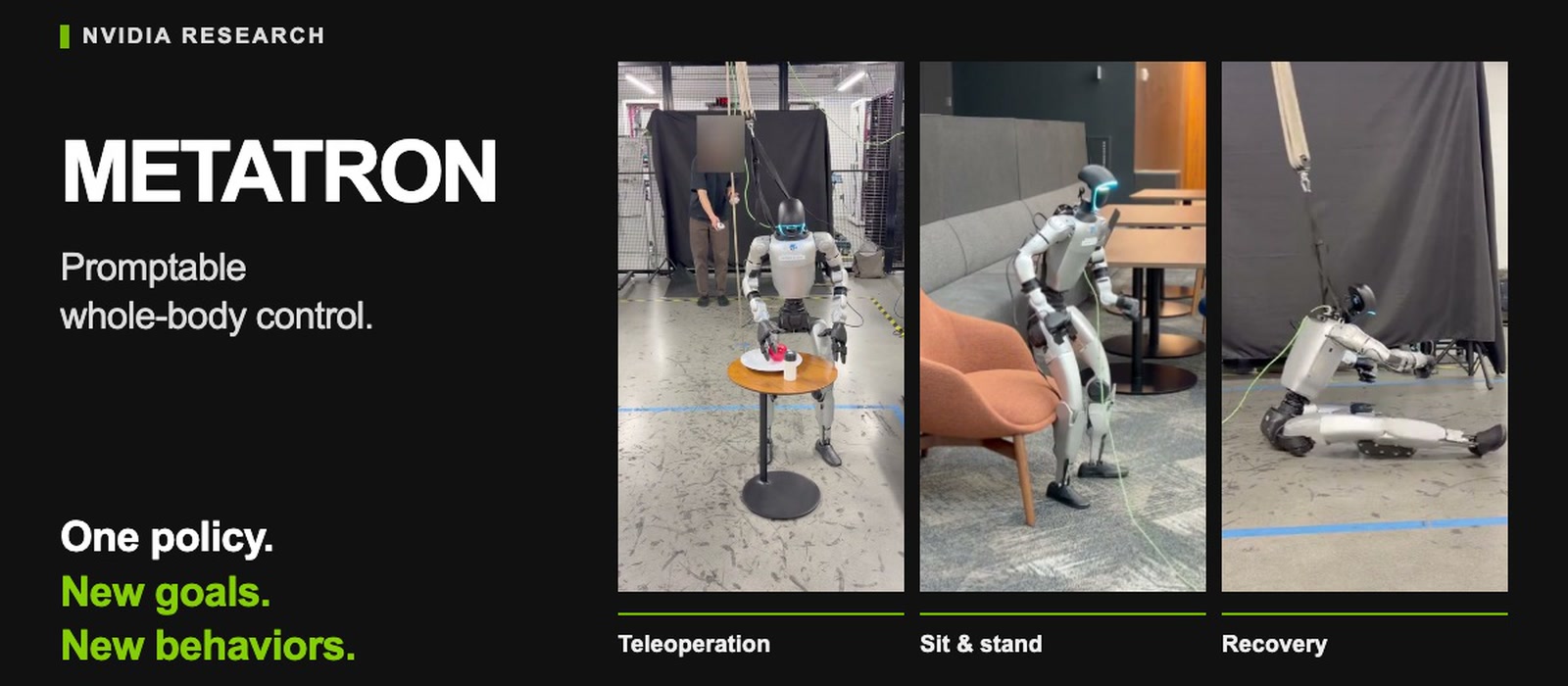
Metatron gives Unitree G1 one frozen controller. The benchmarks are still simulated.
NVIDIA’s policy handles steering, reaching, recovery, teleoperated pickup and sitting through changing goal prompts. Its 83% reaching result and push tests are MuJoCo results, while hardware evidence remains qualitative.
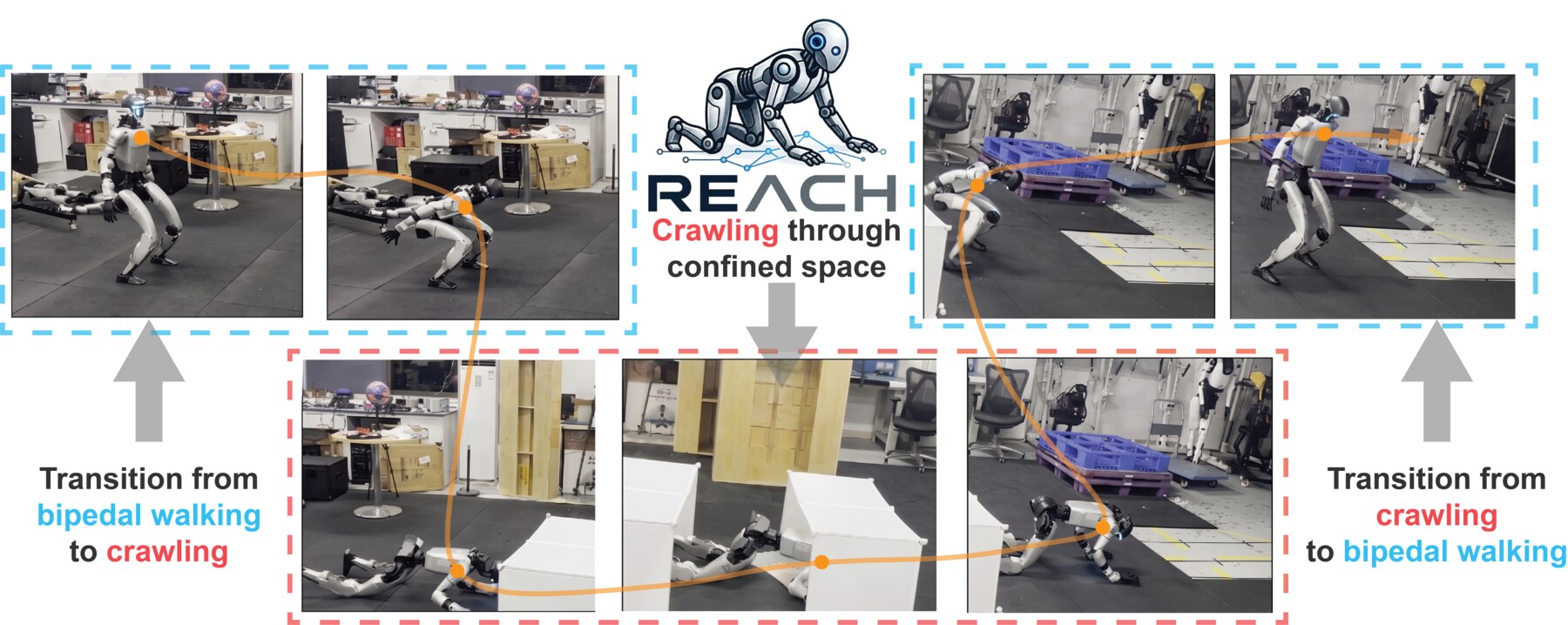
REACH gets Unitree G1 under a 40 cm clearance. The reliability result is narrower.
The system combines LiDAR planning, variable-height walking and crawling. Its 48/50 real-robot transition result is measured; the full confined-space runs are still demonstrations.
Watch Your Step cuts what Unitree G1 needs to see before it steps
A foothold predictor reduces the terrain input from 693 heights to 102 values and reaches the training curriculum roughly three times sooner. Real G1 videos show transfer, not measured reliability.
Reader discussion
No comments yet. Add the first thoughtful contribution.
Join the discussion